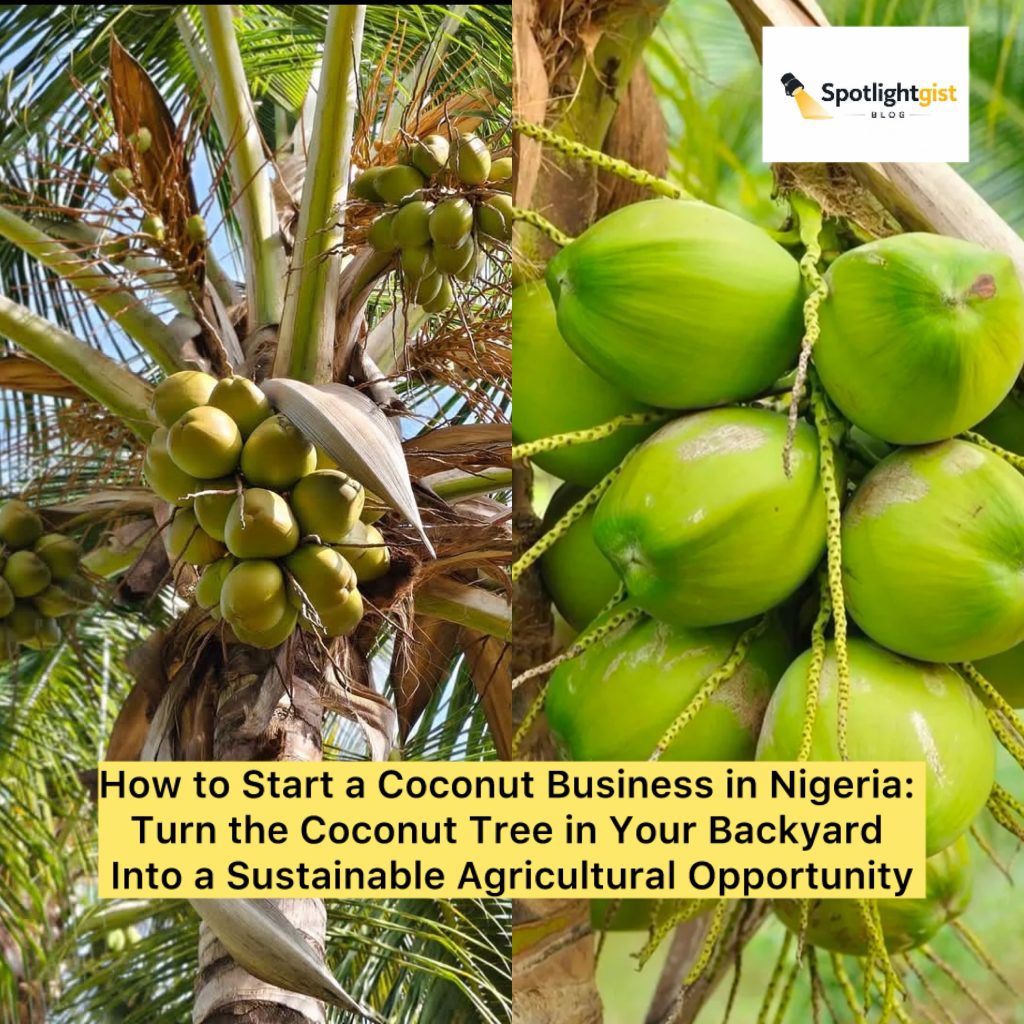
When many people walk past a coconut tree, they see only a tree that produces a refreshing fruit.
But for some entrepreneurs and farmers, that same coconut tree represents something much bigger, an agricultural opportunity with different possibilities across food, cosmetics, manufacturing, and international trade.
A coconut palm standing quietly in a backyard may look ordinary, but behind those green leaves is a crop that has supported businesses, created jobs, and provided raw materials for different industries around the world.
For many years, coconut has been part of everyday life in Nigeria. People enjoy coconut snacks, coconut water, and traditional dishes made with coconut. However, only a small number of people understand the business opportunities hidden within the coconut value chain.
Beyond eating fresh coconut, entrepreneurs can explore areas such as coconut farming, processing, packaging, trading, and supplying coconut-based products to different markets.
The interesting thing about coconut is that almost every part of the plant has a purpose. The fruit, shell, husk, leaves, and other parts can be transformed into useful products.
This makes coconut one of the crops with strong potential for people interested in agriculture and sustainable businesses.
Why Coconut Business Is Gaining More Attention
Agriculture continues to play an important role in Nigeria’s economy, and many people are beginning to look beyond traditional farming methods.
Consumers around the world are showing increasing interest in natural products, plant-based ingredients, and environmentally friendly materials.
Coconut fits into many of these industries.
The fruit is used for food products, while coconut oil is used in cooking, skincare, and beauty products. Coconut milk is used in food preparation, and coconut fiber can be used for different industrial purposes.
This wide range of uses makes coconut different from many crops that have only one major purpose.
An entrepreneur who understands the coconut value chain can identify different opportunities instead of depending on only one product.
The Coconut Tree: A Business Asset Many People Ignore
One reason coconut business remains underexplored is because many people do not recognize the commercial value of coconut trees around them.
In some communities, coconut trees grow naturally around homes and farmlands. Many owners harvest the fruits for personal consumption but do not consider turning them into a business.
However, agriculture is not only about planting crops. It is also about understanding how to create value from what nature provides.
A coconut tree can become a source of raw materials for:
•Food businesses
•Beverage producers
•Cosmetic companies
•Agricultural processors
•Local traders
•Export businesses
The difference between seeing a coconut tree as an ordinary plant and seeing it as a business opportunity is knowledge.
Different Ways to Make Money From Coconut Business
One major advantage of the coconut industry is that there are several ways to participate.
You do not necessarily need to own a large plantation before entering the business.
Below are some areas entrepreneurs can explore.
- Coconut Farming
Coconut farming involves planting and maintaining coconut trees for fruit production.
Unlike some crops that require frequent replanting, properly managed coconut palms can continue producing fruits for many years.
Farmers who invest in coconut cultivation can supply fresh coconuts to traders, processors, and manufacturers.
However, farming requires patience, proper land preparation, good seedlings, and regular maintenance.
- Coconut Trading
Not everyone involved in coconut business is a farmer.
Some entrepreneurs focus on buying coconuts from farmers and supplying them to customers.
A coconut trader connects producers with markets.
This can involve:
•Buying from rural farmers
•Sorting and cleaning products
•Transporting coconuts
•Selling to wholesalers, retailers, or processors
Trading can be a practical entry point for beginners who want to understand the industry before investing in farming or processing.
- Coconut Processing
Processing is where entrepreneurs add more value to the raw product.
Instead of selling only fresh coconut, businesses can transform it into different products.
Examples include:
Coconut Oil
Coconut oil is used in cooking, beauty products, and other industries.
Coconut Milk
Coconut milk is popular in food preparation and is used in many traditional and modern recipes.
Coconut Flour
Coconut flour is produced from processed coconut meat and is used as an alternative ingredient in some food products.
Coconut Chips
Coconut can be processed into snacks with proper preparation and packaging.
Coconut Water
The natural water inside coconut fruits has become popular among consumers looking for refreshing beverages.
Can Nigerian Coconut Products Reach International Markets?
The global demand for agricultural products creates opportunities for countries that can supply quality products.
Nigerian coconut products can potentially serve both local and international markets when they meet required standards.
Countries around the world use coconut products for different purposes, including food production, cosmetics, and manufacturing.
However, anyone interested in exporting should understand that international trade requires proper planning.
Export businesses must pay attention to:
•Product quality
•Proper packaging
•Documentation
•Customer requirements
•Transportation arrangements
•Relevant regulations
Exporting is not simply about finding a foreign buyer. It requires building a reliable supply system that can consistently deliver quality products.
How To Start a Coconut Business Step by Step
Step 1: Understand the Industry Before Investing
Every successful business begins with knowledge.
Before putting money into coconut business, learn about:
•Coconut varieties
•Production areas
•Customer needs
•Processing methods
•Storage practices
•Market opportunities
Understanding the industry helps you avoid common mistakes.
Many businesses fail not because the idea is bad, but because the owner enters without enough knowledge.
Step 2: Choose Your Business Model
Decide which part of the coconut industry matches your resources and interests.
You can choose:
Coconut Farming
Suitable for people interested in long-term agricultural production.
Coconut Supply
Suitable for people who want to connect farmers with buyers.
Coconut Processing
Suitable for entrepreneurs interested in creating finished products.
Coconut Distribution
Suitable for people who want to focus on moving products from producers to consumers.
Starting with one area allows you to gain experience and gradually expand.
Step 3: Identify Your Target Customers
Before producing anything, understand who will buy from you.
Your customers could include:
•Local consumers
•Food businesses
•Restaurants
•Cosmetic companies
•Retail shops
•Agricultural processors
•Export buyers
A good business owner does not only produce products; they understand the people who need those products.
Step 4: Build Reliable Supply Relationships
A strong supply network is important in agriculture.
If you are not growing coconuts yourself, develop relationships with farmers and suppliers.
Reliable suppliers help you maintain consistency and meet customer expectations.
Trust is one of the most valuable assets in agricultural businesses.
Step 5: Add Value Instead of Selling Only Raw Coconut
One of the biggest opportunities in the coconut industry is value addition.
Many agricultural entrepreneurs increase their market opportunities by transforming raw products into finished or semi-finished products.
Instead of selling only fresh coconut fruits, entrepreneurs can explore products such as:
•Coconut oil
•Coconut milk
•Coconut flour
•Coconut snacks
•Coconut-based beauty products
•Coconut fiber materials
•Coconut shell products
Value addition allows businesses to serve different categories of customers.
For example, a person interested in food production may focus on coconut flour or coconut snacks, while someone interested in beauty products may explore coconut oil-based products.
The important thing is to understand your market and maintain quality.
How to Market Your Coconut Business Successfully
Having a good product is only one part of building a successful business.
People need to know that your product exists.
Marketing helps you connect with customers, build trust, and create a strong brand.
Build an Online Presence
Today, many customers discover businesses online.
You can use platforms such as:
•Facebook
•Instagram
•TikTok
•WhatsApp Business
•A business website
Share useful content about your products, production process, and benefits.
For example, a coconut oil business can share educational posts about how the product is made, packaging processes, and customer experiences.
Educational marketing helps people trust your brand.
Build Relationships With Local Buyers
Before thinking about international markets, many successful businesses begin by serving local customers.
You can build relationships with:
•Food vendors
•Restaurants
•Retail stores
•Supermarkets
•Cosmetic producers
•Other businesses that use coconut products
Strong local relationships can help you understand customer needs and improve your products.
Packaging Matters
The way a product looks can influence how customers perceive it.
Clean and professional packaging helps create confidence.
Good packaging should:
•Protect the product
•Provide important information
•Show professionalism
•Make the product attractive to customers
For processed coconut products, proper labeling and packaging are important parts of building a trusted brand.
Exploring Coconut Export Opportunities
Exporting agricultural products can create access to larger markets, but it requires preparation.
A common mistake some entrepreneurs make is focusing only on finding foreign buyers without first building a reliable supply chain.
Before entering export markets, businesses should understand:
•Product quality requirements
•Packaging expectations
•Transportation processes
•Documentation requirements
•International customer expectations
A successful exporter needs consistency.
A buyer who receives quality products once will expect the same standard every time.
Common Mistakes People Make in Coconut Business
Like every business, coconut entrepreneurship has challenges.
Understanding common mistakes can help beginners make better decisions.
- Starting Without Proper Research
Some people enter agriculture because they hear about opportunities but fail to understand the market.
Before starting, learn about your customers, competitors, suppliers, and production process.
- Ignoring Quality Control
Quality determines customer satisfaction.
Poor handling, improper storage, or bad packaging can affect the value of coconut products.
Businesses that focus on quality are more likely to build loyal customers.
- Trying To Do Everything At Once
A beginner may want to start farming, processing, exporting, and selling different products immediately.
This can create unnecessary pressure.
It is often better to start with one area, gain experience, and expand gradually.
- Failing To Build Customer Relationships
Customers are the foundation of every business.
A business that focuses only on production but ignores customers may struggle to grow.
Communication, reliability, and good service help create long-term relationships.
Challenges Facing Coconut Businesses
Although coconut has many opportunities, entrepreneurs should also understand possible challenges.
Limited Awareness
Many people still do not fully understand the business potential of coconut.
Education and awareness are important for industry growth.
Processing Equipment
Some coconut products require specialized equipment.
Entrepreneurs interested in processing may need to invest in suitable tools and technology.
Transportation and Storage
Agricultural products require proper handling.
Poor transportation or storage methods can reduce quality.
Market Competition
Like every industry, coconut businesses compete for customers.
Strong branding, quality products, and good customer service help businesses stand out.
Tips For Building a Sustainable Coconut Business
Long-term success requires patience and consistency.
Here are important principles to follow:
Learn Continuously
Agriculture changes constantly. Continue improving your knowledge about farming methods, processing, and markets.
Focus On Quality
Quality attracts repeat customers.
Keep Business Records
Track your expenses, suppliers, customers, and business activities.
Good records help you make better decisions.
Start Small and Grow
You do not need to build a large company overnight.
Many successful businesses started with small steps.
Build Trust
Trust is one of the most valuable assets in business.
Customers are more likely to return when they know they can depend on your products.
Questions people ask About Coconut Business :
Is coconut business profitable?
Coconut business can provide opportunities for entrepreneurs who understand the market, manage resources properly, and create quality products. Like every business, results depend on planning, execution, and market conditions.
Can I start coconut business without owning a farm?
Yes. Many entrepreneurs participate through buying, selling, processing, packaging, or distributing coconut products.
Owning a plantation is only one part of the value chain.
How long does it take for coconut trees to produce fruits?
The production period depends on factors such as coconut variety, planting conditions, and farm management practices.
Farmers should seek proper agricultural guidance when establishing coconut plantations.
What coconut products can I sell?
Possible products include:
•Fresh coconut
•Coconut water
•Coconut oil
•Coconut milk
•Coconut flour
•Coconut snacks
•Coconut fiber products
•Coconut shell products
Can Nigerian coconut products be exported?
Yes, Nigerian agricultural products can access international markets when businesses meet required quality, documentation, and regulatory standards.
Exporting requires proper preparation and understanding of international trade processes.
The Future of Coconut Business in Nigeria
As more people discover opportunities in agriculture and value-added businesses, crops like coconut may receive more attention.
The future of agricultural entrepreneurship will not only depend on producing raw materials but also on creating innovative products that meet customer needs.
Young entrepreneurs, farmers, and investors who take time to understand the coconut value chain can position themselves in different areas of the industry.
The biggest opportunities often come from seeing possibilities where others see ordinary things.
A coconut tree in a backyard may look simple, but with knowledge, planning, and creativity, it can become the foundation of a meaningful agricultural venture.
Then Finally:
The coconut business is a reminder that valuable opportunities can sometimes exist around us without receiving enough attention.
A coconut palm is not just a tree that provides shade or fresh fruit. It is part of a wider agricultural ecosystem with opportunities in farming, processing, distribution, and international trade.
However, success does not come from simply planting coconut trees or buying coconuts.
It comes from understanding the market, producing quality products, building relationships, and continuously improving.
For anyone interested in agriculture, the coconut industry offers a chance to explore a business built around one of nature’s most versatile crops.
The journey may start with one coconut tree, one idea, or one small step, but with dedication and proper knowledge, that small beginning can grow into something much bigger.
I hope you’re learning from this article
Will you start the business?
Congratulations in advance
Spotlightgist want to see you starting the business and become an inspiration to others.