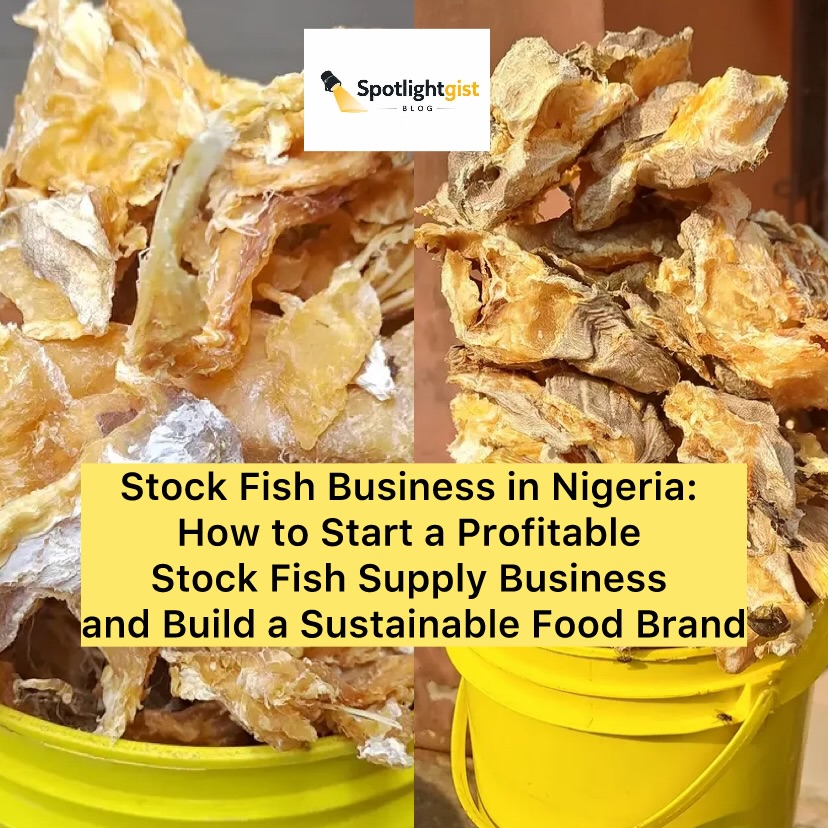
Stock Fish Business in Nigeria: How to Start a Profitable Stock Fish Supply Business and Build a Sustainable Food Brand
Meta Description:
Learn how to start a stock fish business in Nigeria, where to buy stock fish, how to sell to homes, restaurants, hotels, and caterers, storage tips, challenges, and growth strategies.
Primary Keywords:
Stock fish business in Nigeria, how to start stock fish business, stock fish suppliers in Nigeria, selling stock fish in Nigeria, foodstuff business ideas in Nigeria.
Stock Fish Business in Nigeria: A Complete Guide for Beginners
Food has always been one of the most important parts of human life. Regardless of economic changes, people will continue to prepare meals every day, and this creates opportunities for businesses connected to food production, supply, and distribution.
One food business that has maintained strong demand in Nigeria for many years is the stock fish business.
Stock fish is a popular ingredient used in many Nigerian homes, especially when preparing traditional soups and special meals. Its unique taste and ability to add flavour to different dishes have made it a valuable food item across various communities.
For many families, restaurants, hotels, and catering businesses, stock fish is not considered an ordinary ingredient. It is often seen as an important addition that improves the quality and richness of meals.
This continuous demand has created opportunities for entrepreneurs who are interested in food trading and supply businesses.
Unlike some businesses that depend heavily on changing trends, stock fish trading is connected to everyday consumption. People continue to buy it for home cooking, celebrations, restaurants, and commercial food preparation.
However, building a successful stock fish business requires more than simply buying and selling. Entrepreneurs need to understand the market, identify reliable suppliers, maintain product quality, manage storage properly, and build trust with customers.
This guide explains everything you need to know about starting and growing a stock fish business in Nigeria.
Why Stock Fish Business Continues to Grow in Nigeria
Nigeria has one of the richest food cultures in Africa. Every region has different traditional meals, cooking methods, and ingredients that make their dishes unique.
Stock fish has become an important part of this food culture.
In many southern Nigerian communities, especially in states such as Akwa Ibom, Cross River, Rivers, and other Niger Delta areas, stock fish is commonly used when preparing traditional soups.
Soups such as:
•Afang soup
•Editang soup
•Atama soup
•Vegetable soups
•Different seafood-based delicacies
are often prepared with ingredients that include stock fish because of the flavour and texture it adds.
Many people who enjoy traditional meals consider stock fish an important ingredient that cannot easily be replaced.
Beyond individual households, there is also a large commercial market.
Restaurants that serve local dishes require regular supplies of food ingredients. Hotels with restaurants need consistent suppliers. Catering businesses preparing meals for events often purchase stock fish in larger quantities.
This creates opportunities for people who can provide quality products and reliable service.
Understanding How the Stock Fish Business Works
The stock fish business can operate in different ways depending on your business goals and available resources.
Some people start as small retailers, while others grow into wholesalers and major suppliers.
Generally, the business involves:
- Sourcing stock fish from suppliers
- Selecting quality products
- Storing them properly
- Selling to customers
- Building regular supply relationships
A beginner may start by selling directly to consumers in a community, while a more established trader may supply restaurants, hotels, and other businesses.
The important thing is understanding your target market.
A person selling to households may focus on smaller quantities and affordable options, while someone supplying restaurants may focus on bulk sales and consistent availability.
Different Ways to Sell Stock Fish in Nigeria
One advantage of this business is that there are different sales channels available.
- Retail Stock Fish Sales
Retail selling involves buying stock fish and selling directly to individual customers.
Customers may include:
•Families
•Workers
•Students
•Local residents
•Market shoppers
Retail sales can be done through:
•A physical shop
•A market stall
•A home-based business
•Social media platforms
Many successful food traders started by serving people around their communities before expanding.
- Wholesale Stock Fish Supply
Wholesale trading involves purchasing larger quantities and supplying other sellers or businesses.
Wholesale customers may include:
•Foodstuff retailers
•Restaurants
•Caterers
•Hotels
•Food vendors
This approach requires stronger supplier relationships and better storage arrangements because customers expect regular availability.
- Restaurant and Hotel Supply
Supplying restaurants and hotels can become a valuable part of the business.
Many food businesses prefer working with reliable suppliers because they need ingredients regularly.
A supplier who delivers quality products consistently can build long-term relationships with these businesses.
The focus should not only be on making sales but also becoming a trusted partner.
Types of Stock Fish Products You Can Sell
The stock fish market has different categories, allowing sellers to serve different customers.
Whole Stock Fish
Whole stock fish is commonly purchased by households and commercial food businesses.
Some customers prefer buying whole fish because they can cut it according to their cooking needs.
Stock Fish Pieces
Smaller pieces are popular among customers who want affordable quantities.
Selling different sizes allows you to serve customers with different budgets.
Stock Fish Head
Many people value stock fish heads because of their taste and texture when added to soups.
The head is not simply a leftover part; it has its own market among consumers who specifically request it.
Dried Stock Fish
Dry stock fish is one of the most common forms sold in Nigeria.
Proper drying helps preserve the product and allows customers to store it for longer periods.
Some buyers prefer dried stock fish because they can keep it until they are ready to cook.
How to Start Stock Fish Business in Nigeria Step-by-Step :
Starting a stock fish business requires proper planning and understanding of your market. While the size of the business may differ from one entrepreneur to another, the basic principles remain the same.
A person starting on a small scale and someone planning to become a major supplier both need to focus on quality products, reliable sources, and customer satisfaction.
Below are important steps to consider when starting a stock fish business in Nigeria.
- Carry Out Market Research Before Starting
The first step before entering the business is understanding the market around you.
Many people make the mistake of buying products without first knowing what customers actually need.
Market research helps you answer important questions such as:
•Who are the major buyers in your area?
•Which sizes of stock fish do people prefer?
•Are customers buying more whole stock fish or smaller pieces?
•Are there restaurants or hotels that need regular suppliers?
•Who are the existing sellers and what can you do differently?
Understanding your environment gives you a better chance of making informed business decisions.
For example, a seller operating close to restaurants may focus more on bulk supply, while someone in a residential area may focus more on household customers.
- Find Reliable Stock Fish Suppliers
A good supplier is one of the most important parts of the business.
The quality of the stock fish you sell will influence your reputation and customer trust.
Reliable suppliers help you access products that are:
•Properly preserved
•Clean
•Suitable for cooking
•Available consistently
Many stock fish traders source their products through major food markets, distributors, and established foodstuff suppliers.
Before choosing a supplier, consider:
•Product quality
•Consistency
•Customer service
•Pricing structure
•Reliability
Building a good relationship with suppliers can make it easier to maintain your business operations.
- Choose Your Business Location Carefully
Location can influence how easily customers find and buy from you.
A good location for a stock fish business may include:
•Busy markets
•Foodstuff trading areas
•Residential communities
•Areas close to restaurants
•Places with high human traffic
However, location is not the only factor that determines success.
Some entrepreneurs successfully run stock fish businesses from home by using customer referrals, WhatsApp marketing, and delivery services.
The most important thing is creating a system where customers can easily access your products.
- Understand Stock Fish Quality
One of the biggest differences between successful food traders and struggling sellers is their understanding of quality.
Customers do not only look at price; they also want products they can trust.
Important things to check include:
Appearance
Quality stock fish should have a good appearance and proper preservation.
Cleanliness
Products should be handled carefully to maintain hygiene.
Storage Condition
Poor storage can affect quality and reduce customer confidence.
A trader who consistently provides good products is more likely to build repeat customers.
- Learn Proper Storage Methods
Storage is a major part of the stock fish business.
Because stock fish is a food product, proper handling is necessary to maintain quality.
Important storage practices include:
Keep Products Away From Moisture
Moisture can affect the condition of stock fish and reduce its shelf life.
Maintain Clean Storage Areas
The storage environment should be clean and free from substances that can contaminate food products.
Protect Products From Pests
Proper protection helps prevent damage and maintain product quality.
Arrange Products Properly
Organising stock fish properly makes it easier to manage inventory and serve customers quickly.
Good storage practices help reduce unnecessary losses and improve customer satisfaction.
Who Buys Stock Fish in Nigeria?
One major advantage of stock fish business is that there are different categories of customers.
Understanding your customers helps you create a better selling strategy.
- Families and Individual Consumers
Households remain one of the biggest markets for stock fish.
Many families purchase stock fish regularly for cooking traditional meals and special dishes.
Some customers buy small quantities for personal cooking, while others purchase larger quantities during celebrations and family events.
- Restaurants and Food Vendors
Restaurants are important customers because they prepare meals daily.
Many restaurants serving Nigerian dishes require ingredients consistently.
A stock fish supplier who provides good quality products and reliable delivery can build a strong relationship with restaurant owners.
- Hotels With Restaurants
Hotels that operate restaurants also require regular food supplies.
They often prefer suppliers who can provide quality products when needed.
Building relationships with hotels can create opportunities for regular business transactions.
- Catering Businesses
Caterers preparing meals for weddings, birthdays, meetings, and other events often purchase food ingredients in larger quantities.
A supplier who understands their needs can become a preferred business partner.
- Schools and Large Feeding Centres
Some boarding schools and institutions that prepare meals for many people may require food suppliers who can provide ingredients consistently.
Although these opportunities may require stronger supply capacity, they represent another possible market for established traders.
How to Market Your Stock Fish Business
Marketing is important because customers need to know that your products exist.
A good marketing strategy does not always require complicated methods.
Here are practical ways to promote a stock fish business:
Use WhatsApp Business
WhatsApp has become a powerful tool for small businesses.
You can:
•Upload pictures of available products
•Share price updates
•Inform customers about new stock
•Receive orders
•Maintain customer relationships
Many food businesses use WhatsApp because it allows direct communication with customers.
Build a Social Media Presence
Platforms like Facebook and Instagram can help you showcase your products.
You can share:
•Quality product images
•Customer reviews
•Delivery updates
•Business information
A professional online presence can help people discover your business beyond your immediate location.
Create Customer Loyalty
One of the strongest marketing strategies is keeping existing customers.
Satisfied customers can recommend your business to friends, family members, and colleagues.
Focus on:
•Good customer service
•Honest transactions
•Quality products
•Reliable communication
Building Relationships With Restaurants and Bulk Buyers
Supplying businesses requires a different approach from selling to individuals.
Restaurants and hotels value reliability.
They want suppliers who can:
•Deliver when needed
•Provide consistent quality
•Communicate clearly
•Understand their requirements
Instead of approaching businesses only when you need sales, focus on building professional relationships.
Visit restaurants, introduce your business, and explain how you can provide value.
Over time, a few reliable business customers can become an important part of your growth.
Challenges of Stock Fish Business in Nigeria
Like every other business, stock fish trading comes with opportunities as well as challenges. Understanding these challenges before starting helps entrepreneurs prepare better and make smarter decisions.
A successful business owner does not only focus on the benefits; they also understand possible obstacles and create strategies to overcome them.
Below are some common challenges faced by people in the stock fish business.
- Changes in Market Prices
The price of stock fish can change due to different factors, including supply conditions, transportation costs, exchange rates, and general market situations.
A trader who does not monitor the market may struggle to make good decisions.
Successful stock fish sellers usually:
•Follow market trends
•Maintain relationships with suppliers
•Buy carefully
•Avoid unnecessary waste
Understanding pricing helps businesses remain competitive while still maintaining quality.
- Maintaining Product Quality
Food businesses depend heavily on trust.
A customer who buys poor-quality stock fish may not return and may discourage others from buying from the same seller.
This is why maintaining quality is extremely important.
Business owners should pay attention to:
•Proper handling
•Clean storage
•Product selection
•Good packaging
A reputation for quality can become one of the strongest advantages a stock fish seller has.
- Competition Among Sellers
Because stock fish is a popular food ingredient, many people are already involved in the business.
Competition is normal in every industry.
Instead of competing only through price, entrepreneurs can stand out by offering:
•Better customer service
• Reliable supply
•Quality products
•Faster response to customers
•Different product options
Customers often remain loyal to sellers they trust.
- Storage and Inventory Management
Managing stock properly is important.
Buying too much without proper storage can create challenges, while buying too little may make it difficult to meet customer demand.
A good inventory system helps business owners know:
•What products are available
•What products sell faster
•When to restock
•Which customers buy regularly
Good management reduces unnecessary problems.
Common Mistakes Beginners Make in Stock Fish Business
Many businesses struggle not because the idea is bad, but because of poor planning and management.
Here are mistakes new stock fish traders should avoid.
- Starting Without Understanding the Market
Some beginners enter the business because they see other people selling stock fish successfully.
However, every location has different customer needs.
Before starting, understand:
•Your target customers
•Popular product sizes
•Local demand
•Existing competition
Research helps you avoid making costly decisions.
- Buying Poor Quality Products Because They Are Cheaper
Trying to reduce expenses by buying low-quality stock fish can damage a business.
Customers remember quality.
A seller known for poor products may find it difficult to build loyal customers.
It is better to focus on providing value and maintaining trust.
- Ignoring Customer Service
Business is not only about products; it is also about relationships.
Customers appreciate sellers who:
•Communicate politely
•Respond quickly
•Keep promises
•Treat them with respect
Good customer service encourages repeat purchases.
- Not Keeping Business Records
Many small business owners do not track their sales, expenses, and inventory.
Keeping simple records helps you understand your business performance.
Important records may include:
•Purchase information
•Sales records
•Customer details
•Expenses
•Stock availability
Good records support better decision-making.
How to Grow Your Stock Fish Business Into a Bigger Brand :
Starting small is common in many successful businesses.
The goal should be to build a reliable system that allows gradual growth.
Here are ways to expand your stock fish business.
- Increase Your Customer Base
A business grows when more people know about it.
You can attract more customers by:
•Offering quality products
•Encouraging referrals
•Building online visibility
•Connecting with food businesses
Every satisfied customer can become an opportunity for more growth.
- Supply More Businesses
As your capacity improves, consider supplying:
•Restaurants
•Hotels
•Caterers
•Food vendors
•Retail sellers
Business customers can provide regular demand when relationships are properly maintained.
- Add Related Food Products
Many foodstuff businesses grow by adding complementary products.
A stock fish seller may eventually consider adding other food ingredients that customers commonly purchase.
This can make the business a more complete food supply store.
- Improve Packaging and Branding
Professional presentation can make a business appear more trustworthy.
Simple improvements such as:
•Clean packaging
•Clear business name
•Contact information
•Consistent customer service
can help create a stronger brand identity.
The Cultural Importance of Stock Fish in Nigerian Cuisine :
Food in Nigeria is deeply connected to culture, tradition, and family.
Many ingredients represent more than just cooking materials; they represent memories, celebrations, and identity.
Stock fish has become part of many Nigerian traditional meals because of the unique flavour it adds.
In Akwa Ibom State, Cross River State, and other parts of southern Nigeria, many families prepare traditional soups where stock fish plays an important role.
Meals such as Afang soup, Editang soup, Atama soup, and other local dishes are often associated with rich flavours created through the combination of different ingredients.
This cultural connection continues to support the demand for stock fish among many consumers.
Questions people frequently asked About Stock Fish Business in Nigeria :
Is stock fish business profitable in Nigeria?
Stock fish business can be a good business opportunity when properly managed. Like every business, success depends on factors such as product quality, customer demand, proper planning, and effective management.
Who are the major customers for stock fish sellers?
Major customers include households, restaurants, hotels, caterers, food vendors, and other businesses that prepare meals.
Can a beginner start stock fish business on a small scale?
Yes. Many entrepreneurs start small and gradually expand as they gain customers and understand the market better.
Where can stock fish sellers get customers?
Customers can be found through local communities, markets, restaurants, hotels, catering businesses, referrals, and online platforms.
How can I make my stock fish business different from others?
You can stand out through:
•Quality products
•Reliable customer service
•Good communication
•Proper packaging
•Consistent supply
Finally :
Building a Sustainable Stock Fish Business in Nigeria
The stock fish business remains an interesting opportunity because it is connected to one of the most important parts of Nigerian life food.
From family kitchens to restaurants, hotels, and catering businesses, the demand for quality food ingredients continues to create opportunities for suppliers.
However, success in this business is not only about buying stock fish and selling it. It requires understanding customers, maintaining quality, managing products properly, and building trust over time.
Entrepreneurs who focus on consistency, honesty, and good service can create a strong foundation for a sustainable food supply business.
Stock fish is more than just a cooking ingredient; it is part of Nigeria’s food culture. For those willing to learn the market and build patiently, the business can become a valuable venture that serves customers and creates long-term growth opportunities.