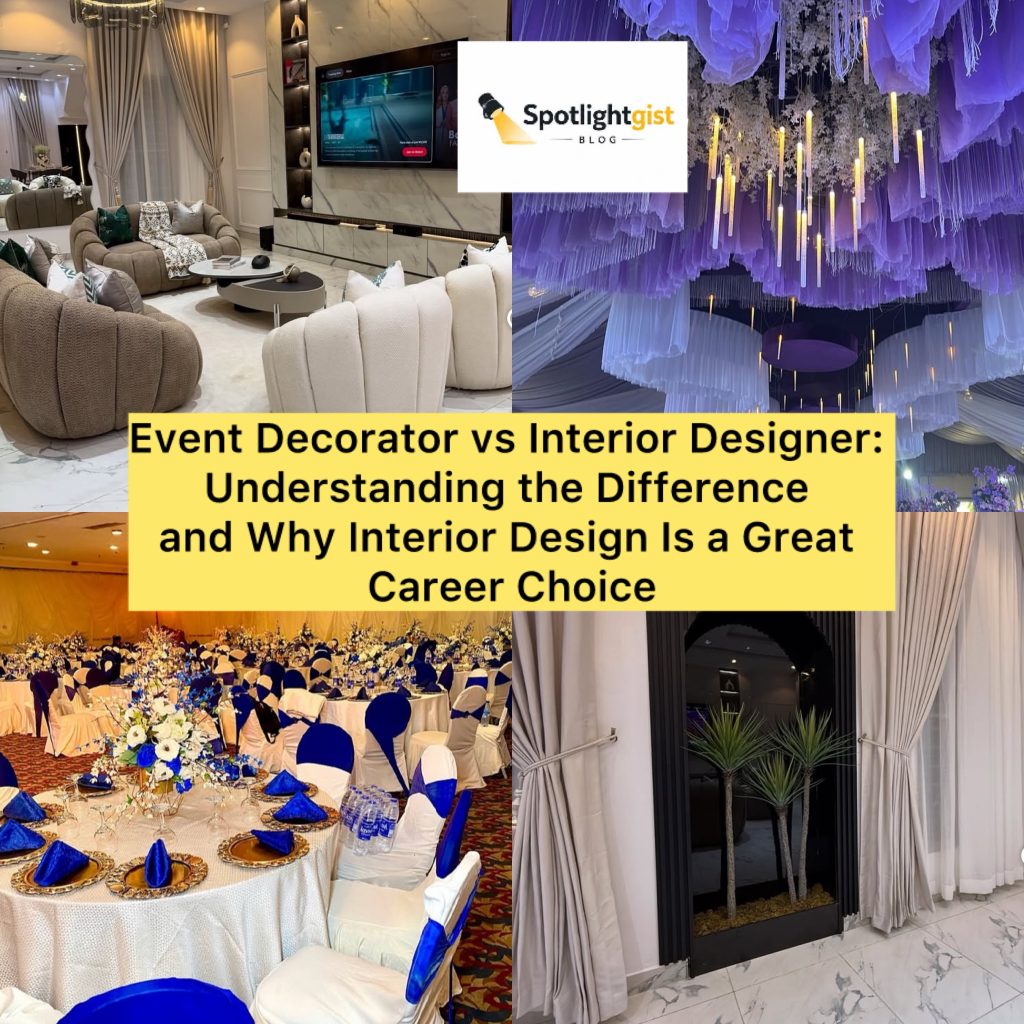
Many people use the terms event decorator and interior designer interchangeably, believing they refer to the same profession. While both careers involve creativity and transforming spaces into attractive environments, they are completely different fields with unique responsibilities, skills, and goals.
This misunderstanding has caused many people to pursue one profession while expecting the responsibilities of the other. Some even hire an event decorator when they actually need the expertise of an interior designer, or vice versa.
Understanding the difference between these professions is important whether you are planning to build a career, start a business, or simply renovate your home or organize a special event.
The demand for creative professionals has grown significantly in recent years. As more homes, hotels, restaurants, churches, offices, schools, and event centres are being built and renovated, the need for skilled decorators and designers continues to increase.
Although both professions focus on improving appearance, their methods, objectives, and working environments are entirely different.
If you are a young person searching for a creative career that allows you to express your ideas while solving real-life design problems, this guide will help you understand both professions and choose the path that best matches your interests.
What Is an Event Decorator?
An event decorator is a creative professional responsible for beautifying venues prepared for special occasions. Their work focuses on creating an attractive atmosphere that matches the purpose and theme of an event.
Unlike permanent building designs, event decoration is temporary. Once the event is over, the decorations are carefully removed, and the venue returns to its original condition.
An event decorator combines colours, fabrics, lighting, flowers, furniture, balloons, and decorative accessories to create memorable experiences for guests.
Their creativity helps transform an ordinary hall into a beautiful wedding venue, a colourful birthday party, an elegant conference hall, or a peaceful burial setting.
Their success is measured by how well the venue reflects the client’s vision and how guests experience the event.
Events That Require Decoration
Event decorators work on different occasions, including:
•Wedding ceremonies
•Traditional marriages
•Engagement ceremonies
•Birthday celebrations
•Child dedication services
•Naming ceremonies
•Burial ceremonies
•Graduation parties
•Church programmes
•Conferences
•Award ceremonies
•Corporate events
•Product launches
•Anniversary celebrations
•Cultural festivals
Every event has its own colour combinations, decoration style, and atmosphere.
Responsibilities of an Event Decorator
An event decorator’s work goes beyond hanging beautiful fabrics.
Depending on the event, they may be responsible for:
•Designing stage backgrounds
•Decorating reception halls
•Arranging flowers
•Balloon decoration
•Creating beautiful entrances
•Decorating tables and chairs
•Setting up photo areas
•Installing decorative lighting
•Designing walkways
•Coordinating venue colours
•Decorating bridal seating areas
•Styling cake tables
Their goal is to ensure every part of the venue complements the event’s purpose.
What Is an Interior Designer?
An interior designer is a professional who plans and improves indoor spaces to make them beautiful, functional, comfortable, and practical.
Unlike event decorators who work on temporary venues, interior designers create spaces that people use every day.
Their designs are intended to remain for many years.
Rather than decorating a wedding hall for one day, an interior designer may spend weeks or months transforming a family home, hotel, office, church, restaurant, school, hospital, or commercial building into an attractive and comfortable environment.
Interior designers combine creativity with planning to improve how people live, work, study, relax, and interact within a building.
They pay attention not only to appearance but also to comfort, safety, movement, lighting, and efficient use of available space.
Places Where Interior Designers Work
Interior designers are involved in projects such as:
•Residential homes
•Luxury apartments
•Duplexes
•Hotels
•Restaurants
•Schools
•Universities
•Churches
•Mosques
•Hospitals
•Shopping malls
•Office buildings
•Banks
•Salons
•Boutiques
•Guest houses
•Event centres
•Conference halls
Every project presents unique challenges that require creativity and careful planning.
What Does an Interior Designer Do?
An interior designer helps property owners create indoor spaces that are attractive and practical.
Their responsibilities often include:
•Planning room layouts
•Selecting colour schemes
•Recommending flooring materials
•Choosing ceiling designs
•Advising on wall finishes
•Planning lighting placement
•Selecting furniture styles
•Coordinating decorative accessories
•Improving space utilization
•Supervising installation work
•Creating comfortable living and working environments
Every decision is made with the client’s preferences, lifestyle, and budget in mind.
How Interior Designers Work With Clients
Most interior design projects follow a structured process.
- Consultation
The designer meets the client to understand their needs, preferences, budget, and expectations.
- Site Inspection
The designer visits the property to assess the available space and existing conditions.
Measurements are taken to ensure accurate planning.
- Design Proposal
After studying the property, the designer presents ideas, material samples, colour combinations, sketches, or digital concepts.
The client reviews the proposal and requests adjustments if necessary.
- Budget Planning
Once the preferred design is approved, the project budget is prepared.
The client decides which materials and finishes fit their budget.
- Project Execution
The designer supervises the installation process to ensure every detail matches the approved design.
- Final Styling
Furniture, decorations, lighting, and finishing touches are arranged before handing the completed project to the client.
Event Decorator vs Interior Designer: The Major Differences
Although both careers involve creativity, they are not the same profession.
Duration of Work:
An event decorator creates temporary decorations that are removed after the event.
An interior designer creates permanent indoor environments designed to last for many years.
Purpose:
Event decoration focuses on making celebrations beautiful and memorable.
Interior design focuses on improving everyday living and working spaces
Working Environment :
Event decorators mostly work in:
•Event centres
•Wedding venues
•Churches
•Outdoor ceremonies
•Conference halls
Interior designers work inside:
•Homes
•Hotels
•Restaurants
•Offices
•Schools
•Hospitals
•Commercial buildings
Materials Used
Event decorators commonly use:
•Fabrics
•Flowers
•Balloons
•Temporary lighting
•Decorative stands
•Backdrops
Interior designers often work with:
•Furniture
•Paint finishes
•Wallpapers
•Ceiling designs
•Tiles
•Curtains
•Lighting systems
•Decorative panels
•Wood finishes
•Storage solutions
Project Duration
Many event decoration projects can be completed within one or two days.
Interior design projects may last several weeks or even months depending on the size of the building and the scope of work.
Essential Skills Every Interior Designer Needs
Interior design is about much more than choosing attractive colours.
Successful designers develop a wide range of skills that help them deliver excellent results.
Some of these include:
•Creativity
•Communication skills
•Attention to detail
•Colour coordination
•Space planning
•Problem-solving
•Time management
•Project planning
•Teamwork
•Client relationship management
These skills improve through learning, practical experience, and continuous practice.
Why Many Young People Are Choosing Interior Design
Creative industries continue to create opportunities for talented individuals.
Interior design appeals to many young people because it combines artistic expression with practical problem-solving.
Every project is different, allowing designers to develop new ideas instead of repeating the same type of work every day.
As cities expand and more residential and commercial buildings are developed, property owners increasingly seek professionals who can create spaces that are comfortable, attractive, and functional.
For young people who enjoy creativity, planning, and working with people, interior design can be a fulfilling profession that offers opportunities for continuous learning and professional growth.
Is Interior Design a Good Career Choice?
Interior design can be a rewarding career for individuals who enjoy creativity, organization, and improving spaces.
The profession allows you to work on a variety of projects, from private homes to hotels, restaurants, offices, schools, and commercial buildings.
Success in this field depends on developing practical skills, building a strong portfolio, communicating effectively with clients, and consistently delivering quality work.
Like many skilled professions, growth takes time, dedication, and a willingness to keep learning as design trends and client preferences evolve.
A professional interior designer combines creativity, planning, technical knowledge, and an understanding of human needs to create spaces that are comfortable, functional, and visually appealing.
Interior design is not only about buying expensive furniture or using luxury materials. It is about making the best use of available space while creating an environment that matches the client’s lifestyle, purpose, and budget.
This part explores the different areas of interior design, how beginners can learn the profession, important tools, design principles, and the trends shaping the industry.
Different Types of Interior Design
Interior design is a broad profession with different areas of specialization. A designer can choose to focus on one area or develop skills across multiple areas.
- Residential Interior Design
Residential interior design focuses on creating beautiful and comfortable living spaces.
This includes:
•Family houses
•Apartments
•Duplexes
•Luxury homes
•Bedrooms
•Living rooms
•Kitchens
•Bathrooms
A residential interior designer considers the lifestyle of the people living in the home.
For example, a family with children may require practical designs with enough storage space, while a young professional may prefer a modern and minimalistic style.
The goal is to create a home that feels comfortable, organized, and personal.
- Commercial Interior Design
Commercial interior design focuses on business and public spaces.
Examples include:
•Offices
•Banks
•Shopping center’s
•Salons
•Boutiques
•Restaurants
•Hotels
The designer’s responsibility is not only to make the space attractive but also to support the purpose of the business.
For example, a restaurant interior should create a welcoming atmosphere for customers, while an office should encourage productivity and comfort for workers.
- Hospitality Interior Design
Hospitality design focuses on spaces where people receive services and experiences.
This includes:
•Hotels
•Resorts
•Guest houses
•Restaurants
•Lounges
Hospitality designers understand that appearance influences how customers feel about a brand.
A well-designed hotel room, restaurant, or lounge can create a memorable experience for visitors.
- Office Interior Design
Modern companies understand that their work environment affects employee performance and satisfaction.
Office interior designers create workplaces that balance:
•Comfort
•Productivity
•Professional appearance
•Organization
•Efficient use of space
They consider furniture arrangement, lighting, meeting areas, relaxation spaces, and employee needs.
- Retail Interior Design
Retail interior designers help businesses create attractive shopping environments.
They focus on:
•Product displays
•Customer movement
•Lighting
•Brand identity
•Store arrangement
A well-designed shop can make it easier for customers to discover products and enjoy their shopping experience.
- Healthcare Interior Design
Healthcare spaces require careful planning because they must combine comfort, cleanliness, and functionality.
Examples include:
•Clinics
•Hospitals
•Medical center’s
Designers consider factors such as patient comfort, accessibility, safety, and efficient movement.
Popular Interior Design Styles
Interior designers use different styles depending on the client’s taste and the purpose of the space.
Modern Design Style
Modern design focuses on simplicity, clean lines, and practical arrangements.
It often includes:
•Simple furniture
•Open spaces
•Neutral colors
•Functional layouts
Minimalist Design Style
Minimalist design focuses on reducing unnecessary items and creating peaceful environments.
The idea is “less is more.”
Spaces usually contain carefully selected furniture and decorations.
Luxury Design Style
Luxury interior design focuses on elegance and premium appearance.
It may include:
•High-quality materials
•Stylish furniture
•Decorative lighting
•Unique finishing touches
Luxury design is often used in expensive homes, hotels, and executive offices.
Traditional Design Style
Traditional design uses classic elements inspired by history and culture.
It often includes:
•Detailed furniture
•Rich colors
•Classic decorations
•Elegant patterns
Contemporary Design Style
Contemporary design reflects current trends and changes over time.
It combines modern ideas with new materials, technology, and creative solutions.
How to Become an Interior Designer Step by Step :
Many people believe interior design is only for people who attended expensive design schools. However, anyone with passion, dedication, and willingness to learn can develop skills in this profession.
Here are important steps for beginners.
Step 1: Develop Your Creativity
The foundation of interior design is creativity.
A designer must learn how to imagine possibilities and transform empty spaces into attractive environments.
Practice observing:
•Building structures
•Colour combinations
•Furniture arrangements
•Lighting effects
•Different design styles
Train your eyes to notice details.
Step 2: Learn the Basics of Design
Before handling professional projects, beginners need to understand important design concepts such as:
•Color theory
•Space planning
•Balance
•Proportion
•Lighting
•Texture
•Furniture arrangement
These principles help designers create spaces that look organized and professional.
Step 3: Get Practical Training
Practical experience is one of the most important parts of becoming a good interior designer.
You can learn through:
•Apprenticeship
•Working with experienced designers
•Professional courses
•Design workshops
•Online learning platforms
Theory is important, but real projects teach valuable lessons.
Step 4: Build a Portfolio
A portfolio shows potential clients what you can do.
For beginners, it can include:
•Personal design projects
•Room makeovers
•Sample designs
•Before-and-after transformations
•Digital designs
A strong portfolio helps clients trust your ability.
Step 5: Understand Materials and Finishing
Professional interior designers understand different materials and where they are suitable.
Examples include:
•Tiles
•Wood
•Paint
•Wallpapers
•Fabrics
•Glass
•Metals
•Lighting equipment
Knowing materials helps designers make better recommendations.
Important Tools Used by Interior Designers
Interior designers use different tools to plan and present their ideas.
Traditional Tools
Some basic tools include:
•Measuring tape
•Sketch books
•Drawing materials
•Color samples
•Material catalogues
Digital Design Tools
Technology has transformed modern interior design.
Many designers use software to create realistic concepts before starting construction.
Digital tools help with:
•Floor plans
•3D visualization
•Furniture placement
•Color testing
•Client presentations
These tools allow clients to see how a finished space may look before work begins.
Important Principles of Interior Design
Professional designers follow certain principles to create balanced spaces.
Balance
Balance means arranging elements in a way that creates visual stability.
A room should not feel too heavy on one side.
Harmony
Harmony means ensuring different parts of a space work together.
Colours, furniture, lighting, and decorations should complement each other.
Proportion
Proportion focuses on the relationship between different objects in a room.
Large furniture may not fit well in a small room, while tiny decorations may disappear in a large space.
Functionality
A beautiful space must also be useful.
Good design considers how people will move and use the environment.
Lighting
Lighting plays an important role in interior design.
The right lighting can improve the mood, appearance, and comfort of a space.
Common Mistakes Beginners Should Avoid :
Many new designers make mistakes when starting their careers.
Copying Every Trend
Trends change frequently. A good designer understands trends but focuses on creating timeless designs.
Ignoring the Client’s Needs
The designer’s personal taste should not replace the client’s expectations.
The goal is to create a space that works for the client.
Poor Budget Planning
A designer must respect the client’s budget and recommend realistic solutions.
Lack of Attention to Details
Small details often determine whether a design looks professional or incomplete.
Interior Design Trends in 2026
Modern interior design continues to evolve as people’s lifestyles change.
Some popular trends include:
•Functional spaces
•Natural materials
•Smart home features
•Comfortable furniture
•Sustainable design ideas
•Better lighting solutions
- Personalized spaces
Many property owners now want designs that combine beauty with comfort and practicality.
Why Continuous Learning Matters in Interior Design
The best designers continue learning throughout their careers.
New materials, technologies, and customer preferences constantly influence the industry.
A designer who keeps improving their skills has a better chance of remaining competitive and delivering quality results.
How to Build a Successful Interior Design Career, Find Clients, Grow Your Brand, and Long-Term Opportunities
In the first two parts of this guide, we explained the difference between an event decorator and an interior designer, the various areas of interior design, important skills, design principles, and how beginners can develop themselves in the profession.
However, learning interior design is only the beginning. To become successful, a designer must understand how to build experience, attract clients, manage projects, and create a strong reputation.
Interior design is not only a creative skill; it is also a professional service that requires good communication, planning, responsibility, and business knowledge.
A talented designer who understands how to present their work, build trust with clients, and consistently deliver quality results can create long-term opportunities in the industry.
How to Start an Interior Design Career
Starting an interior design career does not happen overnight. It requires patience, continuous learning, and practical experience.
Here are important steps beginners can follow.
- Learn From Experienced Professionals
One of the fastest ways to improve is by learning from people who already understand the industry.
Working with experienced interior designers allows beginners to understand:
•How projects are planned
•How clients are handled
•How materials are selected
•How budgets are managed
•How challenges are solved
Practical experience helps transform knowledge into professional ability.
- Start With Small Projects
Many successful designers begin with small assignments before handling major projects.
Small projects may include:
•Redesigning a bedroom
•Improving a living room
•Decorating a small office
•Helping a friend organize a space
Every completed project builds confidence, experience, and a portfolio.
The goal is not only the size of the project but the quality of the result.
- Create a Professional Portfolio
A portfolio is one of the most important tools for an interior designer.
It shows potential clients your creativity and previous work.
A good portfolio can include:
•Pictures of completed projects
•Design concepts
•Room transformations
•Material selections
•Before-and-after images
•Client testimonials
For beginners without many completed projects, sample designs and personal projects can help demonstrate ability.
How Interior Designers Attract Clients
Finding clients is one of the biggest challenges for many beginners.
However, with the right approach, designers can build visibility and attract opportunities.
Build an Online Presence
Today, many people search online before hiring professionals.
Interior designers can showcase their work through:
•Professional websites
•Social media pages
•Design communities
•Online portfolios
Sharing completed projects, design ideas, and educational content can help people discover their services.
Use Quality Photos of Your Work
Interior design is a visual profession.
High-quality images help potential clients understand your ability.
A poorly presented project may not attract attention even if the design itself is excellent.
Good photography should highlight:
•Room arrangement
•Lighting
•Finishing details
•Color combinations
•Overall atmosphere
Encourage Client Recommendations
Satisfied clients can become one of the strongest sources of new business.
When people love the transformation of their home, office, or business space, they are more likely to recommend the designer to others.
Professional behaviour, honesty, and quality delivery help create strong client relationships.
Networking and Partnerships
Building relationships with other professionals can create more opportunities.
Interior designers can connect with:
•Architects
•Builders
•Real estate developers
•Furniture companies
•Construction professionals
•Property owners
These relationships can lead to referrals and collaborations.
The Business Side of Interior Design
Although creativity is important, successful designers also understand business management.
Important business skills include:
Budget Management
A designer must understand how to work within different budgets.
Clients have different financial abilities, so a professional designer should provide solutions that match their resources.
Communication
Clear communication prevents misunderstandings.
Designers should explain:
•Project expectations
•Materials being used
•Timelines
•Costs
•Possible challenges
Good communication builds trust.
Project Management
Interior designers often coordinate different activities, including:
•Material purchasing
•Installation schedules
•Workers
•Suppliers
Good organization helps projects run smoothly.
Challenges Interior Designers Face
Like every career, interior design comes with challenges.
Understanding these challenges helps beginners prepare better.
Managing Different Client Expectations
Every client has different tastes and preferences.
Some may prefer modern designs, while others may want traditional styles.
A professional designer learns how to understand each client’s vision and provide suitable solutions.
Working Within Budgets
Not every client has unlimited resources.
A good designer knows how to create beautiful spaces while considering available funds.
Creativity often involves finding smart alternatives.
Handling Changes During Projects
Sometimes clients change their minds after work has started.
Designers need patience and good communication to manage adjustments professionally.
Why Interior Design Can Be a Good Opportunity for Young People
Many young people are searching for careers that allow them to use creativity while building valuable skills.
Interior design provides opportunities because every building requires thoughtful planning and attractive spaces.
Young people who develop strong skills can work in different areas, including:
•Residential projects
•Commercial spaces
•Hospitality projects
•Office designs
•Property development
The profession allows individuals to grow gradually as they gain experience.
Event Decoration and Interior Design: Can Someone Do Both?
Yes, some professionals combine both skills.
Although they are different careers, knowledge of one can complement the other.
A person who understands interior design may have an advantage when creating event spaces because they understand:
•Colors
•Space arrangement
•Lighting
•Furniture placement
However, someone who wants to specialize should understand that each field requires dedication and continuous improvement.
Questions people frequently asked:
About Event Decoration and Interior Design
Is an event decorator the same as an interior designer?
No. Event decorators focus on temporary decorations for occasions such as weddings, parties, and ceremonies. Interior designers create permanent designs for homes, offices, hotels, and other buildings.
Which one requires more creativity?
Both professions require creativity, but they use it differently.
Event decorators focus on creating beautiful experiences for specific occasions, while interior designers focus on creating functional and attractive spaces that people use daily.
Can I become an interior designer without a university degree?
Yes. Many people develop interior design skills through practical training, mentorship, professional courses, and experience.
However, continuous learning and improving your skills are important.
Do interior designers buy materials with their own money?
In many professional arrangements, the designer works according to an agreed project budget with the client.
The client approves the design and budget before execution begins.
The exact payment arrangement depends on the agreement between the designer and client.
How long does it take to become a good interior designer?
The time varies depending on dedication, training, and practical experience.
Some people develop basic skills within months, while becoming highly experienced can take years of continuous practice.
Is interior design only for wealthy clients?
No. Interior designers work with different types of clients and projects.
A good designer can create solutions suitable for different spaces and budgets.
Finally:
Event decoration and interior design are both valuable creative professions, but they serve different purposes.
An event decorator focuses on transforming venues for special occasions, creating beautiful environments that make celebrations memorable.
An interior designer focuses on creating comfortable, functional, and attractive spaces that people live and work in every day.
For young people interested in creativity, design, and problem-solving, interior design can be an exciting career path. It provides opportunities to work on different projects, develop valuable skills, and build a professional reputation over time.
Success in this field does not depend only on talent. It requires dedication, continuous learning, professionalism, and the ability to understand clients’ needs.
The most important step is to start learning, gain practical experience, and improve with every project.
A beautiful space does not happen by accident. Behind every well-designed home, office, hotel, or commercial building is the creativity, planning, and expertise of a skilled interior designer.
The Summary:
Event decorators and interior designers both improve spaces through creativity, but their responsibilities are different. Event decorators create temporary designs for celebrations, while interior designers create lasting environments for homes, businesses, and public spaces. Understanding these differences helps individuals choose the right career path and helps clients select the right professional for their projects.