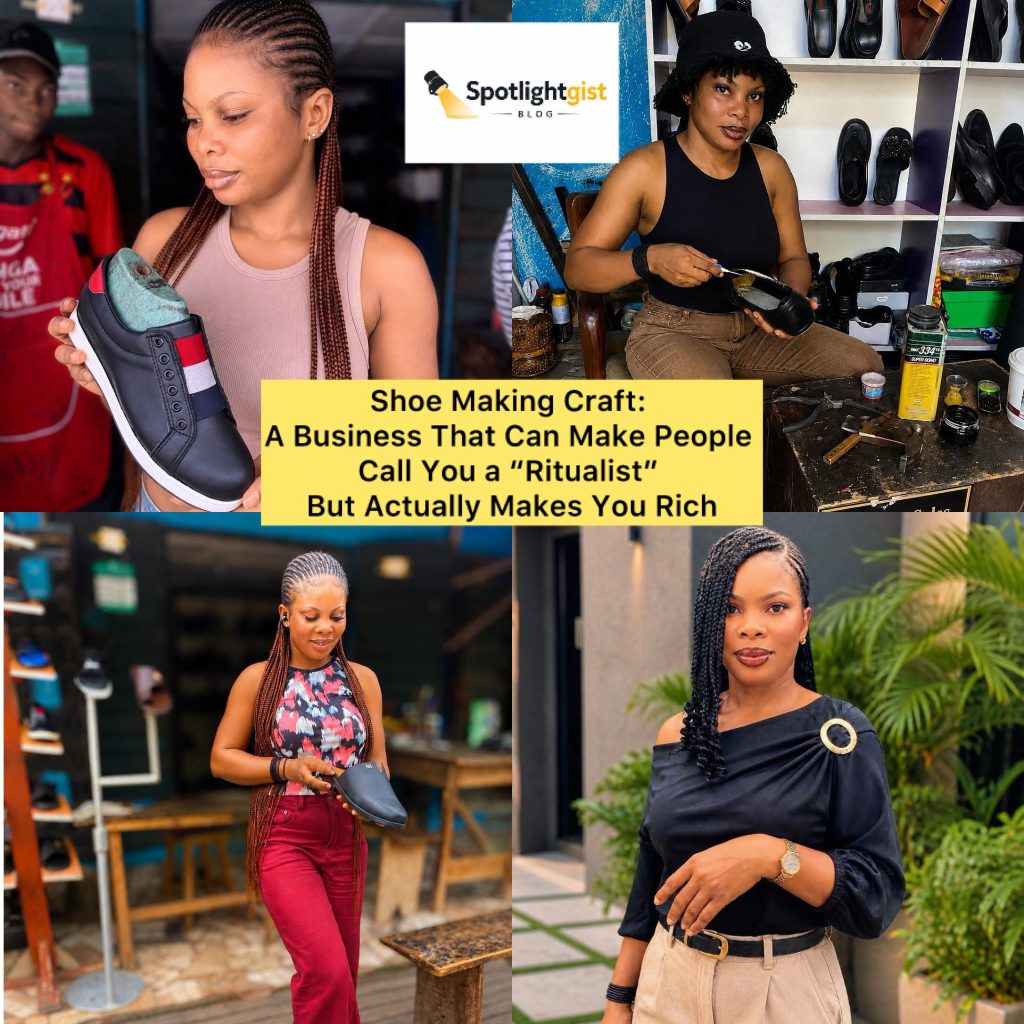
Shoe Making Craft: A Business That Can Make People Call You a “Ritualist” But Actually Makes You Rich
In many communities today, especially in parts of Nigeria and Africa at large, success is still misunderstood. When a young person suddenly starts doing well financially, people begin to ask questions. Sometimes, instead of recognizing hard work, discipline, and skill acquisition, society begins to attach negative labels like “ritualist” or “fraudster.”
One of the most misunderstood crafts that has suffered this kind of perception is shoe making.
Yet behind the scenes, shoe making is quietly becoming one of the most profitable and respected creative industries in the world.
From handmade leather sandals to luxury designer shoes worn by celebrities, politicians, footballers, and influencers, shoe making has evolved from a “small workshop trade” into a global money-making business.
This article explains everything you need to know about shoe making as a craft, why it is highly profitable, how young people are building wealth from it, and how you can start even with little or no experience.
The Misconception Around Shoe Making in our Society:
In many African societies, manual skills are often underestimated. People tend to value white-collar jobs more than creative craftsmanship. Because of this mindset, young artisans sometimes face stigma.
When a shoe maker suddenly begins to earn well, dress better, or live a more comfortable life, people around them may not immediately connect the success to skill. Instead, they assume something suspicious is happening.
But the truth is simple: Shoe making is not magic. It is skill, patience, creativity, and consistency.
What people fail to see is the number of hours spent learning, failing, practicing, and improving before success shows up.
Behind every successful shoe maker there’s:
•Months of training
•Failed designs
•Burnt materials
•Customer feedback
•Relentless practice
So what looks like “overnight success” is actually years of silent effort.
Shoe Making Is Becoming a Goldmine, The global fashion industry is worth billions of dollars, and footwear plays a huge role in it. Today, handmade shoes are not just functional items, they are fashion statements.
Here are reasons shoe making is booming:
- Rising Demand for Handmade Products
People are tired of factory-made, mass-produced shoes. Handmade shoes offer: Unique designs, Better quality control, Personal customization and Luxury feel
- Celebrity Influence
Celebrities, influencers, pastors, politicians, and athletes often prefer customized footwear that fits their style and personality.
This has increased demand for independent shoe makers who can deliver premium designs.
- Social Media Marketing:
Platforms like Instagram, TikTok, and Facebook have turned small artisans into global brands. A shoe maker in Nigeria can now sell to customers in the UK, US, and Canada.
- Youth Unemployment:
Many young people are turning to skill acquisition instead of waiting for white-collar jobs. Shoe making has become one of the top choices.
If you ask me did Shoe Making Really Profitable?
I will say” Yes the shoe making is highly profitable when done correctly.
A well-made pair of shoes in Nigeria can sell between:
₦10,000 to ₦30,000 (standard designs)
₦40,000 to ₦150,000 (premium/custom designs)
₦200,000+ (luxury designer shoes)
Now imagine producing multiple pairs weekly. Even a small workshop can generate consistent income once clients start flowing in.
The real secret is not just making shoes—it is branding, quality, and customer loyalty.
Who Buys Handmade Shoes?
One of the biggest misconceptions is that handmade shoes are for low-income buyers. In reality, the opposite is true.
Customers include:
*Business executives
•Celebrities
•Musicians
•Politicians
•Church leaders
•Fashion enthusiasts
•International buyers
People who care about uniqueness and style are willing to pay more for handcrafted quality.
How Much Does It Cost to Learn Shoe Making? One of the most attractive parts of shoe making is its affordability.
In Nigeria, training can start from as low as:
₦50,000 to ₦150,000 depending on the institution or master trainer. Some advanced programs may cost more, but beginners can start small.
Training usually covers:
•Leather cutting
•Pattern designing
•Sole construction
•Stitching techniques
•Finishing and polishing
•Branding and packaging
Within 3 to 6 months, many students are already producing sellable shoes.
Tools Needed to Start Shoe Making: Starting shoe making does not require a factory. A small space is enough.
Basic tools include:
•Cutting knife
•Hammer
•Glue (adhesive)
•Leather materials
•Shoe last (foot mold)
•Thread and needles
•Sanding tools
•Measuring tools
With these tools, a beginner can start practicing immediately.
Women Are Excelling in Shoe Making. In recent years, more women have entered the shoe making industry and they are excelling.
This is because shoe making allows: Flexibility, Creativity, Small startup capital, Home-based production and Online sales opportunities
Many women now run successful footwear brands while managing family responsibilities. This shift is empowering thousands of young women financially.
How Shoe Making Changes Lives
Shoe making is not just about producing footwear it changes identity and lifestyle.
Many young people who once struggled financially now: Support their families, Pay school fees, Rent apartments, Travel and Build brands
A skill that once looked “ordinary” becomes a gateway to independence.
The Story of Creative Shoe Makers Like Ela Mark Across Nigeria and Africa, several young entrepreneurs are using shoe making to build impactful brands.
For example, creatives like Ela Mark (as part of the growing community of artisans) represent a new generation of designers who combine creativity, branding, and consistency to build respected footwear businesses.
Their journey shows that:
•Talent becomes valuable when refined
•Creativity becomes income when structured
•Skills become wealth when marketed properly
These stories inspire many beginners to take shoe making seriously.
Common Myths About Shoe Making
Myth 1: It is a dirty or low-class job
Wrong. It is a luxury craft industry.
Myth 2: It cannot make you rich
Wrong. Many artisans earn six to seven figures monthly.
Myth 3: You need big capital
Wrong. You can start small and grow gradually.
Myth 4: It is not a “serious career”
Wrong. It is a global industry with huge demand.
Step-by-Step Guide to Starting Shoe Making
Step 1: Learn the Skill
Find a trained shoemaker or institution.
Step 2: Practice Daily
Consistency builds mastery.
Step 3: Start Simple Designs
Don’t rush into complex luxury shoes.
Step 4: Build Your Brand
Choose a name, logo, and identity.
Step 5: Take Quality Photos
Visual presentation attracts customers.
Step 6: Use Social Media
Post regularly on Instagram, TikTok, and Facebook.
Step 7: Get Customers
Start with friends, family, and referrals.
Why Shoe Making Is Better Than Waiting for White Collar Jobs
Many graduates spend years waiting for jobs that are not available.
Shoe making offers: Immediate skill monetization, Independence, Creativity, Scalability and Global reach
Instead of waiting for opportunity, shoe making allows you to create it.
Challenges in Shoe Making Business, Like every business, it has challenges:
• Material cost fluctuations
•Customer negotiation pressure
•Skill learning curve
•Competition
However, those who persist always stand out. Marketing Your Shoe Making Business
To succeed, you must go beyond production.
You must also:
•Build a strong Instagram page
•Post before-and-after designs
•Run ads if possible
•Collaborate with influencers
•Offer discounts for first-time buyers
Marketing is what turns skill into income.The Future of Shoe Making in Nigeria
The future is bright.
With rising fashion awareness, global demand for African craftsmanship, and social media exposure, shoe making will continue to grow.
Nigeria has the potential to become a global hub for handmade footwear if young artisans are supported and trained properly.
Final Thoughts
Shoe making is not just a craft—it is a life-changing opportunity.
What some people misunderstand as a “small job” is actually a powerful industry that has created wealth, independence, and recognition for thousands of young people.
Instead of looking down on skills like shoe making, society should embrace and support them.
Because in today’s world, skills are the new oil.
If you are a young person waiting for admission, job opportunities, or direction in life, shoe making is one of the smartest skills you can learn today.
It can start small but it can grow into something massive.
Shoe making is proof that success does not always come from certificates or office jobs. Sometimes, it comes from your hands, creativity, and willingness to learn.
And in a world where perception often misunderstands success, those who persist quietly in their craft eventually become the ones everyone admires.