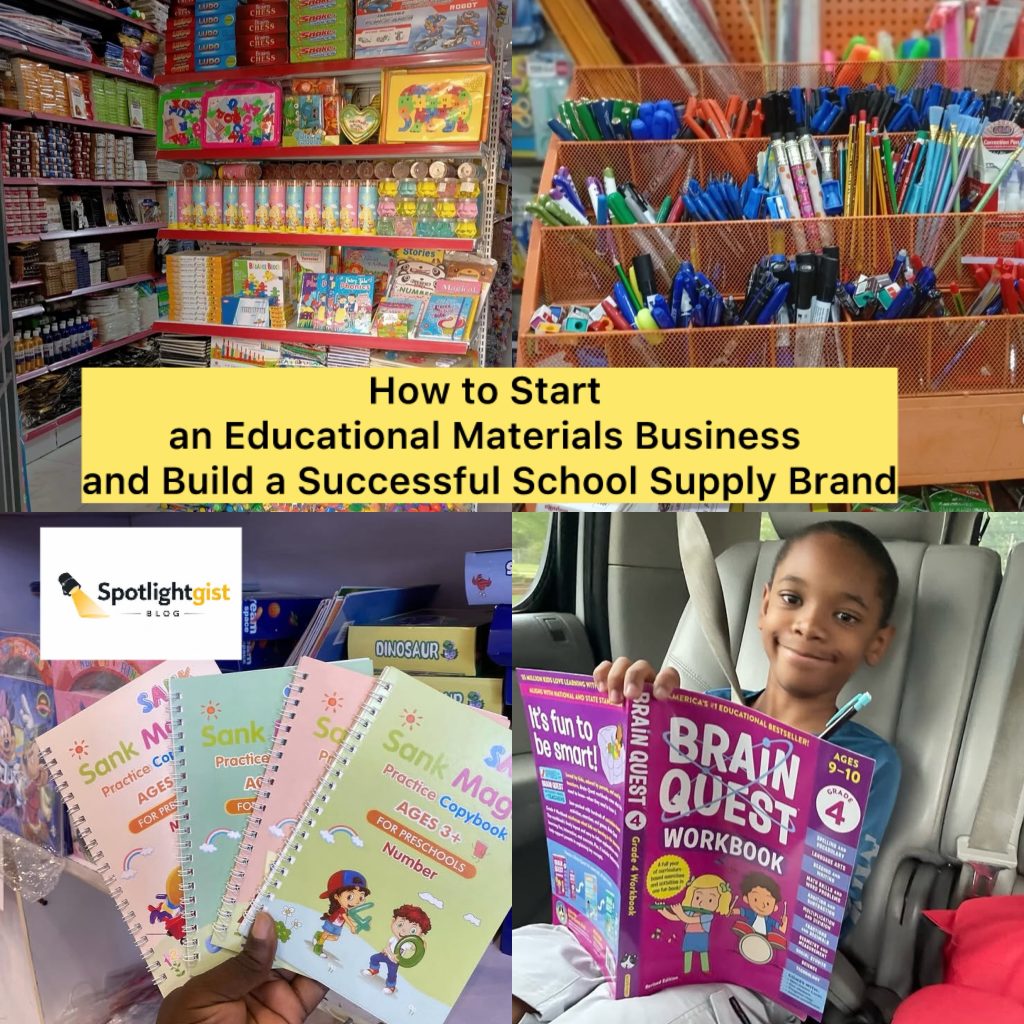
A Business Built Around the Future of Every Generation
Every year, millions of students return to classrooms carrying new hopes, new goals, and new academic ambitions. Behind every successful school term is a constant demand for learning resources — from simple writing materials to textbooks, creative learning tools, classroom equipment, and educational support products.
This demand creates an opportunity for entrepreneurs who understand the importance of education and want to build a business that serves families, schools, and communities.
The educational materials business is one of those businesses that quietly operates in the background but remains important throughout the year. While many businesses depend heavily on trends or changing customer interests, educational supplies continue to have relevance because learning never stops.
A parent preparing a child for school needs notebooks, pens, school bags, and textbooks. A teacher needs markers, charts, instructional materials, and classroom tools. A private school needs regular supplies to keep its academic activities running smoothly.
This means an entrepreneur who builds a trusted educational materials brand can create a business with repeat customers and multiple growth opportunities.
The interesting part is that this business does not always require a large beginning. Someone can start with a small collection of fast-moving items, understand customer needs, build relationships, and gradually expand into a bigger educational supply centre.
This article explains how to start an educational materials business, how to choose the right products, how to attract customers, and how to build a sustainable business around learning.
Understanding the Educational Materials Business
An educational materials business focuses on providing products that support teaching, learning, studying, and school activities.
Many people think this business is only about selling exercise books and pens, but the market is much wider.
A modern educational materials store can serve different categories of customers by providing products such as:
Learning and Writing Supplies
These are everyday items students frequently need:
- Exercise books
- Notebooks
- Pens
- Pencils
- Erasers
- Sharpeners
- Rulers
- Mathematical sets
- Highlighters
- Markers
These products usually move quickly because students replace them regularly.
Textbooks and Academic Resources
Textbooks remain one of the most important parts of the education market.
Depending on your location, you can stock:
- Nursery school books
- Primary school textbooks
- Secondary school textbooks
- Revision materials
- Examination preparation books
- Dictionaries
- Storybooks
Understanding the educational system around you helps you choose books that customers actually need.
Classroom and Teaching Materials
Teachers and schools are also important customers.
Some useful supplies include:
- Whiteboards
- Board markers
- Educational charts
- Maps
- Flashcards
- Classroom decorations
- Teaching aids
- Files and folders
Many entrepreneurs focus only on students and forget that schools themselves can become valuable long-term customers.
Creative and Child Development Materials
Parents are increasingly interested in products that improve children’s creativity and learning abilities.
Examples include:
- Colouring books
- Crayons
- Art materials
- Educational toys
- Puzzles
- Learning cards
This category can create additional sales opportunities, especially for younger children.
Why Educational Materials Remain a Strong Business Opportunity
- The Customer Need Is Constant
One major advantage of this business is that demand is connected to education, which remains a priority for families and institutions.
Children move from one academic level to another, new students enter schools, and existing students continue replacing used materials.
This creates continuous market demand.
Unlike products that depend on fashion trends, educational supplies solve a permanent need.
- You Can Start Small and Grow Gradually
A common mistake many beginners make is believing they need a large shop before starting.
In reality, an entrepreneur can begin by focusing on products with regular demand.
For example:
- A small stationery stand near a school area
- A home-based supply business
- Supplying materials to nearby schools
- Selling during school resumption periods
As customers increase, profits can be reinvested into expanding product variety.
- Multiple Customer Groups Create Stability
A strong educational materials business does not depend on only one type of buyer.
Your potential customers include:
- Parents
- Students
- Teachers
- Private schools
- Tutorial centers
- Training institutions
- Educational organizations
Having different customer groups helps create more opportunities throughout the year.
Choosing the Right Location for Your Business
Location can influence the success of an educational materials business.
A good location should make it easy for customers to find and access your products.
Possible locations include:
Near Schools
This is one of the most strategic options because students, teachers, and parents are already around.
Inside Busy Markets
Markets provide exposure to many customers, especially during school preparation seasons.
Residential Areas
A shop close to families can attract parents who prefer convenience.
Near Tutorial Centres and Learning Hubs
Students preparing for examinations often need books, writing materials, and study resources.
However, a good location alone is not enough. The quality of your products, customer service, pricing, and reliability also determine whether customers return.
Understanding Your Customers Before Buying Stock
One of the biggest lessons in this business is learning not to buy products based only on personal preference.
Successful entrepreneurs study what customers actually need.
Before investing heavily, consider:
- Which schools are around your area?
- What curriculum do they use?
- What classes do most students attend?
- Which products finish quickly?
- What price range can customers afford?
- What items do competitors sell most?
For example, a shop located near primary schools may sell more colouring materials, basic notebooks, and learning aids, while a shop near universities may focus more on textbooks, printing materials, and stationery.
Understanding your environment helps you avoid wasting money on slow-moving inventory.
Planning Your Inventory: Stock What Customers Actually Need
One of the most important decisions in an educational materials business is choosing the right products to stock.
Many beginners make the mistake of buying too many different items without understanding what customers in their area actually purchase. This can tie down money in products that may take a long time to sell.
A smarter approach is to begin with products that have consistent demand and gradually introduce more items as you understand your customers.
Your inventory planning should consider three major factors:
- Fast-Moving Products
These are products customers buy frequently and often need to replace.
Examples include:
- Exercise books
- Pens
- Pencils
- Erasers
- Sharpeners
- Rulers
- Staplers
- Files
- Paper
These items may not always have the biggest profit margin individually, but their regular demand can create steady sales.
- Seasonal Products
Some educational materials experience higher demand during certain periods, especially when schools resume.
Examples include:
- School bags
- New textbooks
- Mathematical sets
- School diaries
- Drawing materials
- Classroom supplies
Planning ahead before these periods can help you meet customer demand and avoid running out of popular products.
- Higher-Value Educational Products
As your business grows, you can introduce products that attract larger purchases.
These may include:
- Educational toys
- Science learning materials
- Large classroom charts
- Advanced textbooks
- School furniture accessories
- Office equipment
A balanced inventory gives you daily sales opportunities while creating room for bigger transactions.
Finding Reliable Suppliers for Educational Materials
The quality of your suppliers can determine the reputation of your business.
Customers expect educational materials to be durable, affordable, and available when needed.
Poor-quality products can discourage repeat customers, especially when parents or schools are purchasing in large quantities.
When searching for suppliers, consider:
Product Quality
Cheap products that quickly damage may affect customer trust. It is better to provide materials that offer reasonable value.
Consistent Availability
A good supplier should be able to provide products regularly, especially during busy academic periods.
Competitive Pricing
Buying at a reasonable wholesale price allows you to set prices that attract customers while protecting your profit.
Variety
Suppliers with a wide range of products make it easier to expand your business.
You can source educational materials from:
- Major stationery markets
- Book distributors
- Educational publishing companies
- Wholesale suppliers
- Manufacturers
- Local distributors
Building good relationships with suppliers can also help you receive updates about new products and market trends.
How Much Capital Do You Need to Start?
The amount required to start an educational materials business depends on your business model, location, and the size of inventory you want to carry.
A small beginner can start with a limited selection of essential items, while someone planning a full school supply store will need more investment.
Your startup budget may cover:
Inventory Purchase
This is usually the biggest expense because your business depends on having products available for customers.
Shop Setup
Depending on your location, this may include:
- Shelves
- Display tables
- Signboard
- Storage spaces
- Lighting
Business Registration and Basic Operations
Some entrepreneurs may also consider:
- Business registration
- Transportation costs
- Packaging materials
- Record-keeping tools
A wise entrepreneur does not only focus on opening a shop; they focus on building a system that can survive and grow.
Starting with manageable stock and reinvesting profits can be a safer strategy than spending all your money at the beginning.
Creating a Business Identity That Customers Remember
The educational materials market can become competitive, especially in areas with many stationery shops.
To stand out, you need more than just selling products.
You need to create trust.
Simple ways to build a strong identity include:
Be Known for Availability
Customers appreciate businesses where they can find what they need without visiting several shops.
Try to maintain stock of popular items.
Offer Helpful Customer Service
Parents and students often need guidance.
A customer who receives helpful recommendations is more likely to return.
Maintain Clean and Organized Displays
A neat shop creates confidence.
Arrange products properly so customers can easily identify what they need.
Build Relationships With Schools
Schools can become valuable long-term customers.
You can introduce your business to:
- School administrators
- Teachers
- Lesson centers
- Educational organizations
Some institutions prefer buying from reliable suppliers who understand their needs.
Marketing Strategies for an Educational Materials Business
Marketing is not only for large companies. Small educational supply businesses can attract customers through simple but effective methods.
Build Relationships During School Resumption Periods
School resumption is one of the busiest times for educational materials sellers.
Prepare early by:
- Stocking popular products
- Advertising your availability
- Creating school supply packages
- Informing nearby schools and parents
Use Social Media to Display Products
Platforms like Facebook, Instagram, and WhatsApp can help customers discover your business.
You can share:
- New products
- Price updates
- School packages
- Special offers
- Customer reviews
A simple online presence can help customers contact you before visiting your shop.
Create School Supply Packages
Many parents appreciate convenience.
Instead of making customers buy every item separately, you can create packages based on different classes.
For example:
- Nursery package
- Primary school package
- Secondary school package
This saves customers time and can increase the value of each purchase.
Keeping Proper Business Records
A business can make sales and still struggle if money is not properly managed.
Good record keeping helps you understand:
- Which products sell fastest
- Which items bring the most profit
- How much money is being spent
- When to restock
- Whether the business is growing
Important records include:
- Daily sales records
- Inventory records
- Supplier information
- Expenses
- Customer orders
Simple discipline in financial management can separate a growing business from one that closes after a short period.
Expanding Beyond a Small Shop: How to Grow Your Educational Materials Business
Starting an educational materials business is only the beginning. The biggest opportunities come when you develop systems that allow the business to serve more customers and generate stronger relationships.
A small stationery shop can gradually become a recognised educational supply brand by improving its services, understanding customer needs, and exploring new areas of growth.
Growth does not always mean opening many branches immediately. Sometimes, growth begins by becoming the most reliable supplier in your community.
Here are practical ways to expand.
Build Strong Relationships With Schools
Schools can become some of the most valuable customers for an educational materials business.
Instead of waiting for individual customers every day, developing relationships with schools can create regular supply opportunities.
You can approach:
- Private schools
- Nursery and primary schools
- Secondary schools
- Tutorial centers
- Training institutions
Offer solutions such as:
- Supplying stationery items
- Providing classroom materials
- Delivering bulk orders
- Preparing school packages
Schools often prefer working with suppliers who understand their needs and can deliver products consistently.
Building trust takes time, but a strong relationship with educational institutions can create long-term business stability.
Introduce Bulk and Wholesale Supply
As your customer base grows, you may discover that other small sellers and schools need educational materials at affordable prices.
This creates an opportunity to move from only retail sales into wholesale distribution.
Wholesale supply involves purchasing larger quantities and selling to:
- Smaller stationery shops
- School vendors
- Educational centers
- Community sellers
The advantage is that you can increase sales volume and create more business connections.
However, wholesale requires careful planning because it involves more inventory and stronger financial management.
Add Complementary Services to Increase Revenue
A successful educational materials business does not have to depend only on selling books and stationery.
Many entrepreneurs increase their opportunities by adding related services.
Examples include:
Printing and Photocopying Services
Students, teachers, and schools regularly need:
- Printed assignments
- Examination materials
- Project documents
- Photocopies
Adding these services can attract more daily customers.
Book Binding and Lamination
Students often need documents, projects, and learning materials protected and professionally presented.
Customized School Materials
You can provide:
- Branded notebooks
- School labels
- Customized files
- Printed educational materials
These services can help your business stand out from ordinary stationery sellers.
Common Mistakes to Avoid in This Business
Like every business, educational materials selling requires proper planning.
Avoiding common mistakes can save you money and protect your reputation.
Buying Too Much Slow-Moving Stock
A large shop does not automatically mean success.
Some products may look attractive but may not sell quickly in your location.
Always study customer demand before increasing your inventory.
Ignoring Customer Relationships
Customers remember how they are treated.
Poor communication, lack of attention, or unreliable service can push buyers to competitors.
Failing to Prepare for Peak Seasons
School resumption periods can bring increased demand.
Businesses that prepare early often benefit more because they already have popular products available.
Mixing Personal Money With Business Money
This is one of the biggest challenges for small businesses.
Separate your business income from personal expenses so you can clearly understand whether the business is growing.
The Role of Technology in Modern Educational Supply Businesses
Technology has changed the way small businesses attract and serve customers.
Even a small educational materials store can use digital tools to improve operations.
Examples include:
- WhatsApp for customer orders
- Social media for product promotion
- Digital payment options
- Online catalogues
- Simple inventory tracking systems
A customer who can easily contact your business may choose you over a competitor who is difficult to reach.
Technology does not replace good customer service, but it can make your business more accessible.
Building Customer Loyalty
The long-term success of an educational materials business depends heavily on repeat customers.
A parent who receives good service may return every academic session.
A school that trusts your supply quality may continue ordering from you.
Ways to encourage loyalty include:
- Providing accurate information
- Maintaining fair pricing
- Remembering regular customers
- Offering reliable service
- Responding quickly to enquiries
A loyal customer base is one of the strongest assets any small business can build.
Future Opportunities in the Educational Materials Market
The education industry continues to evolve, creating new opportunities for entrepreneurs.
Beyond traditional stationery, businesses can explore areas such as:
- Digital learning materials
- Educational games
- Special learning tools
- Teacher resources
- School technology accessories
- Children’s development products
Entrepreneurs who pay attention to changing educational needs can discover new markets before competitors.
The key is to remain adaptable and continue learning.
Questions frequently asked about Education materials business :
Is educational materials business profitable?
The educational materials business can provide income opportunities because students, parents, teachers, and schools regularly need learning supplies. Success depends on factors such as location, product selection, pricing, customer service, and proper business management.
Can I start an educational materials business with small capital?
Yes. Many entrepreneurs begin on a small scale by focusing on essential products with regular demand and expanding gradually as they gain customers.
Where is the best location for an educational materials shop?
Good locations include areas close to schools, residential communities, markets, and learning centres. The best location depends on where your target customers are located.
What products should a beginner sell first?
Beginners can focus on fast-moving items such as exercise books, pens, pencils, erasers, rulers, notebooks, and other basic school supplies before expanding into larger categories.
How can I attract schools as customers?
Build professional relationships with school administrators, offer reliable supply services, maintain good product quality, and provide solutions that make school operations easier.
Conclusion: Building a Business That Supports Learning and Growth
The educational materials business is more than selling books and stationery. It is a business built around one of society’s most important needs, education.
Every student who enters a classroom requires tools to learn. Every teacher needs resources to teach effectively. Every school needs dependable suppliers to operate smoothly.
For entrepreneurs willing to understand their market, manage inventory carefully, provide excellent customer service, and build trust, this business offers opportunities for steady growth.
The most successful educational materials businesses are not only shops; they become trusted partners in the learning journey of families and institutions.
With proper planning, dedication, and continuous improvement, a small educational supply business can grow into a respected brand that serves generations of learners.