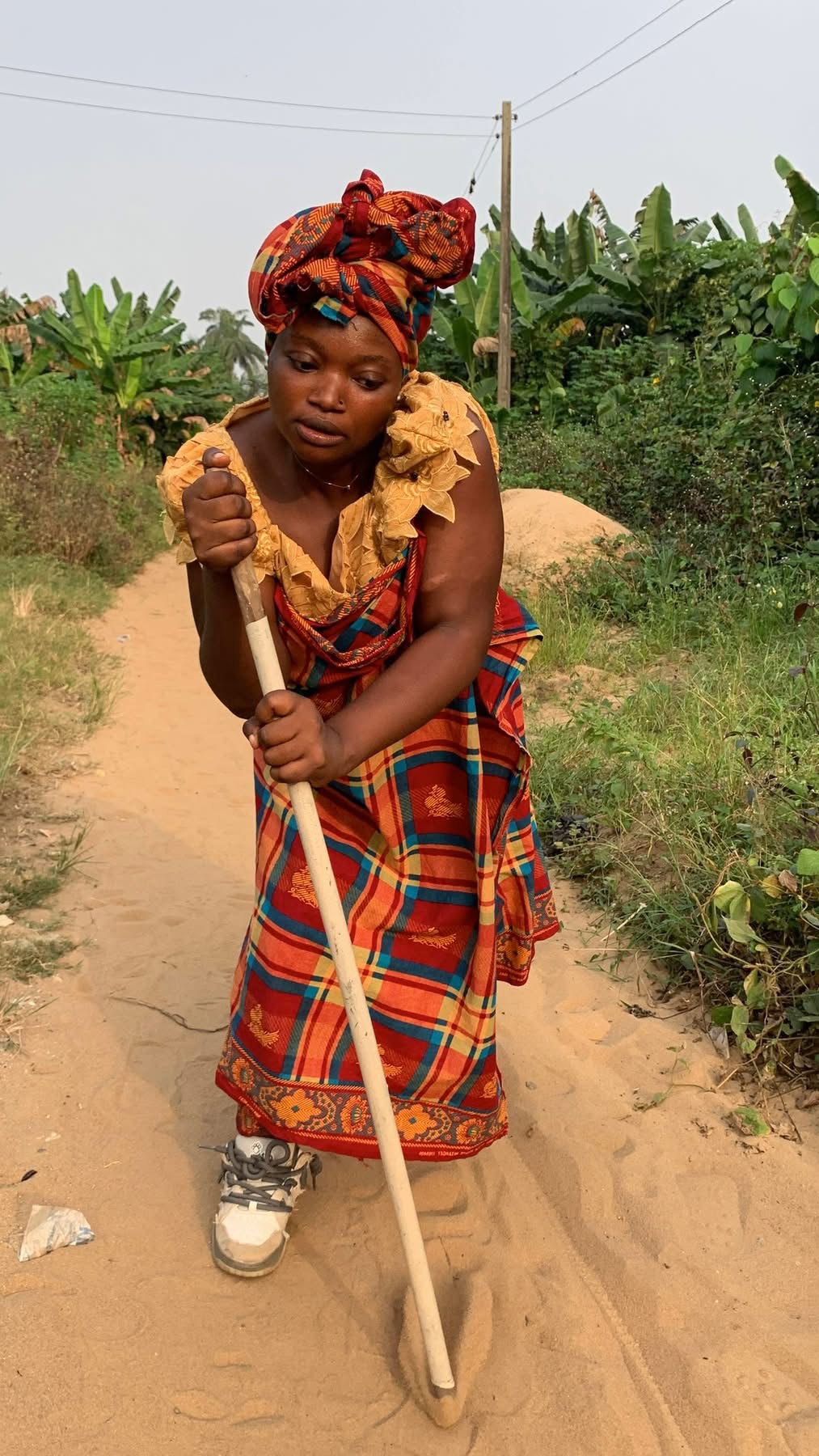
THE POWER OF A GRANDMOTHER: How a Village Woman Raised an Orphan into a Civil Engineer Against All Odds
Introduction: The Story Nobody Talks About…
What happens when a child loses everything before she even learns how to speak?
No father.
No mother.
No direction.
Just silence… and survival.
In a small part of Akwa Ibom State, Nigeria, a little girl named Emem—barely 2 years old—stood at the edge of a life that could have ended in poverty, neglect, or complete disappearance.
But one woman refused to let that happen.
Her grandmother.
This is not just a story.
This is proof that sometimes, destiny doesn’t come from privilege… it comes from sacrifice.
And sometimes, the strongest people are not the loudest—
They are the grandmothers no one writes about.
Background: From Loss to Uncertainty
Emem’s life began with tragedy.
At just two years old, she lost both parents.
She couldn’t talk properly.
She couldn’t run like other children.
She barely understood the world around her.
Relatives whispered:
• “How will this child survive?”
• “Who will take care of her?”
• “This one will suffer…”
And in many Nigerian communities, that kind of beginning often leads to a painful ending.
But her story took a different turn.
The Turning Point: A Grandmother’s Decision
Her grandmother made a bold move.
She took Emem away from the city…
Back to Afaha Nsit, a quiet village where life is simple, but survival is not easy.
To outsiders, it looked like a downgrade.
From “city life” to “village suffering.”
But unknown to many—
That village was where her destiny was waiting.
Early Life in the Village: Where Strength Was Built
Life in Afaha Nsit was not soft.
No steady electricity.
No luxury.
No comfort.
Just:
• Farming
• Fetching water from the stream
• Cooking with firewood
• Walking barefoot on dry soil
Emem grew up watching her grandmother wake up before sunrise…
Working tirelessly on a small piece of land near a stream.
They planted:
• Cassava
• Vegetables
• Local crops
That land was not just farmland.
It was survival.
Struggles: Hunger, Pain, and Silent Tears
There were days they didn’t have enough food.
Days Emem cried from hunger.
Days her grandmother pretended not to be hungry… just so the child could eat.
There were moments when Emem asked questions no child should ask:
• “Where is my mother?”
• “Why don’t I have a father?”
And the grandmother would hold her tight…
With no answers, only tears.
Three Painful Breaking Points
- The Hunger Night
One night, there was no food at all.
They drank water and slept.
Emem cried herself to sleep. - The Mockery
Other children laughed at her slow speech and weak legs.
They called her names. - The Doubt
Even family members doubted her future:
“This girl cannot become anything.”
The Unexpected Breakthrough: When Destiny Found Them
Then something happened that changed everything.
That same farmland…
The one near the stream…
Became the center of attention.
The Federal Government of Nigeria discovered crude oil on that land.
At first, it sounded like a rumor.
Then officials came.
Engineers came.
Surveyors came.
And suddenly—
That “poor farmland” became valuable.
The grandmother was compensated.
Millions of naira.
From Poverty to Possibility
For the first time in years…
Hope became real.
The grandmother didn’t waste time.
She made one decision:
“This money is not for enjoyment… it is for Emem’s future.”
She invested in:
• Education
• Health
• Better living conditions
And eventually—
She did something nobody expected.
She sent Emem abroad for schooling.
Transformation: From Village Girl to Global Scholar
Moving abroad was not easy.
Emem struggled with:
• Language barriers
• Cultural shock
• Identity crisis
She went from:
Village child → International student
But she remembered her grandmother’s sacrifices.
She studied relentlessly.
Sleepless nights.
Lonely days.
Tears in silence.
But she refused to fail.
20 Years Later: The Return of a Star
On June 15, 2025, something powerful happened.
Emem returned to Nigeria.
Not as a victim.
Not as an orphan.
But as a Civil Engineer.
The entire village stood still.
People who once doubted her… now celebrated her.
Children looked at her with inspiration.
Elders nodded with pride.
The Emotional Twist: Rewarding the Real Hero
Emem didn’t forget.
She flew her grandmother abroad.
Gave her comfort.
Gave her peace.
Gave her a life she never had.
The same woman who once farmed under the sun…
Now lives in luxury.
That is the power of gratitude.
Controversies & Social Reactions
Not everyone celebrated.
Some people said:
• “It’s connection.”
• “It’s luck.”
• “There is something behind it.”
Others even claimed spiritual influence.
But the truth remains:
This story is built on:
• Sacrifice
• Discipline
• Faith
• Opportunity
Credibility & Community Confirmation (Proof Layer Section)
To better understand the reality behind Emem’s breakthrough, it is important to look at the wider community context.
According to residents of Afaha Nsit, lands in the area have been subject to oil exploration activities over the years. Community members confirm that families who owned such lands received compensation when discoveries were made.
A local elder shared during a casual discussion:
“We have seen it happen before. When oil is discovered on family land, the government and companies pay compensation. Some families used it wisely, others did not.”
This adds credibility to Emem’s story — her grandmother’s decision to invest the compensation into education was not just lucky… it was intentional and rare.
Why Education Changes Lives in Nigeria (Data Section)
Emem’s transformation is not just emotional — it reflects a bigger truth about Nigeria.
Education remains one of the strongest tools for escaping poverty.
• Studies consistently show that educated individuals earn significantly higher incomes over time
• Children from rural areas who gain access to quality education are more likely to break generational poverty cycles
• Investment in education, especially for young girls, leads to long-term family and community development
In many parts of Nigeria, stories like Emem’s are rare — not because talent is missing, but because opportunity is limited.
Her grandmother didn’t just change one life…
She changed a generation’s trajectory.
Micro-Scenes (Deep Emotional Realism)
Scene 1: The Night of Silent Counting
That night, after everyone had slept…
Her grandmother sat quietly on a wooden stool.
A small kerosene lamp flickered beside her.
She opened a small wrapper and brought out the money — neatly folded.
She counted it slowly.
Once… twice… again.
Then she whispered to herself:
“This money will not finish on useless things… this is this child’s future.”
Tears rolled down her face — not from sadness, but from responsibility.
Scene 2: The First Flight
At the airport, Emem held her small bag tightly.
Everything felt strange.
The announcements… the crowd… the movement.
When she entered the airplane, she paused.
Looked around.
Sat down slowly.
As the plane took off, she held the seat and closed her eyes.
Not out of fear — but disbelief.
A village girl… flying across the world.
Scene 3: The Hidden Tears Abroad
One winter night…
Snow fell heavily outside.
Emem sat alone in her room.
Books open — but unread.
She missed home.
Missed her grandmother.
Missed the simplicity of the village.
She whispered:
“I cannot fail… I cannot waste everything she did for me.”
And that night — she cried silently.
Then wiped her tears… and continued reading.
The Imperfect Moment (Critical for Realism & Trust)
Success was not a straight line.
At one point abroad, Emem almost gave up completely.
The pressure was too much:
• Academic stress
• Cultural shock
• Loneliness
She failed a major test.
For days, she avoided calls from home.
She felt like she was disappointing the one person who believed in her.
“Maybe I am not strong enough…” she thought.
But something inside her refused to break.
She remembered:
• The farm
• The hunger
• The sacrifices
And most importantly — her grandmother’s voice.
That moment didn’t end her journey.
It redefined it.
Lessons from Emem’s Story
- Your Beginning Does Not Define Your Ending
You can start with nothing… and still become something.
- One Person Can Change Your Life
For Emem, it was her grandmother.
Who is that person in your life?
- Opportunity Must Meet Preparation
When the oil money came, they were ready to use it wisely.
- Never Forget Who Helped You
Success without gratitude is empty.
Expert Insight: Why Stories Like This Matter
According to development experts in Nigeria:
• Education is the strongest tool for breaking generational poverty
• Rural support systems (like grandparents) play a key role in child survival
• Resource discovery (like oil) can transform communities—if managed well
This story reflects real societal patterns in Nigeria.
Conclusion: The Power You’re Ignoring
Many people overlook grandmothers.
But they are:
• Caregivers
• Protectors
• Builders of destiny
Emem’s story is not just about success.
It’s about who stayed when everyone left.
Let Me Ask You…
• Who stood by you when life was hard?
• Are you making them proud today?
• What are you doing with your own opportunity?
If This Story Touched You…
Share it.
Someone out there needs hope.
Internal Linking Strategy (For Your Blog)
Link this post to:
• “From Tears to Glory” (Emotional resilience)
• “From House Boy to Media Voice” (Transformation story)
• “Sachet Water Millionaire” (Grass-to-grace journey)
Use anchor texts like:
• “Read another inspiring Nigerian success story”
• “See how struggle builds success”
• “More real-life transformation stories here”
Author
Written by SpotlightGist Editorial Team
We focus on real-life African stories, struggles, and success journeys.
Disclaimer
This story is inspired by real-life experiences and societal realities in rural Nigeria. Some elements have been expanded for storytelling and educational purposes.