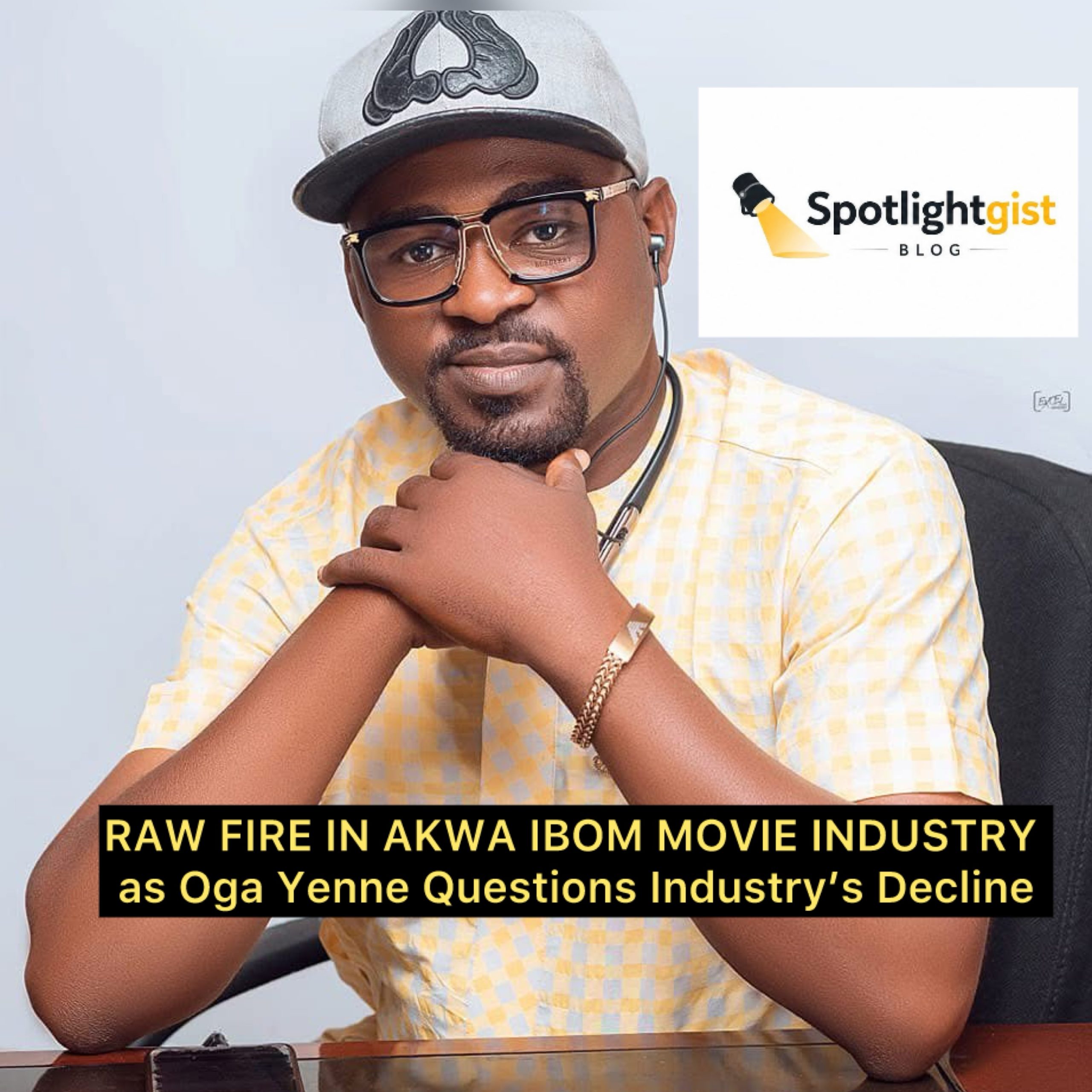
A major conversation has erupted across social media following a thought-provoking question raised by Lagos-based Akwa Ibom influencer, Oga Yenne. His simple but powerful inquiry about the current state of the Akwa Ibom film industry has sparked widespread debate among filmmakers, actors, producers, content creators, and entertainment lovers.
For many years, Akwa Ibom was regarded as one of Nigeria’s fastest-growing regional movie industries. Indigenous films produced in the state attracted large audiences, showcased local culture, and provided opportunities for hundreds of creative talents. At a time when the Nigerian entertainment industry was experiencing rapid expansion, many believed that Akwa Ibom’s movie sector was on the verge of becoming one of the strongest regional film industries in the country.
However, according to many observers, the industry appears to have slowed down significantly in recent years.
This concern became the center of public discussion after Oga Yenne took to Facebook to ask a question that resonated with many people.
Oga Yenne’s Question Sparks Debate
On his Facebook page, Oga Yenne wrote:
“So, what happened to Akwa Ibom film industry? There was a time they were making great movies back to back. We expected by now the industry for don scale. What happened? What changed?”
The post quickly attracted reactions from filmmakers, actors, producers, industry stakeholders, and social media users.
Many people agreed that there was indeed a period when indigenous movies from Akwa Ibom were being released consistently and attracting attention from audiences within and outside the state.
The question opened the door for a broader conversation about the challenges currently facing regional filmmaking in Nigeria.
The Golden Era of Akwa Ibom Filmmaking
Several years ago, Akwa Ibom filmmakers gained recognition for producing movies that reflected the culture, traditions, language, and lifestyle of the people.
The industry witnessed significant growth as producers invested in storytelling that highlighted local experiences and values.
Many young actors found opportunities to showcase their talents while directors experimented with creative narratives that connected with audiences.
The rise of digital cameras and affordable production tools also contributed to increased movie production during that period.
As a result, there was widespread optimism that Akwa Ibom could eventually become a major force in Nigeria’s entertainment landscape.
Expectations for Industry Growth
At the height of its popularity, many industry observers expected the Akwa Ibom movie sector to experience sustained growth.
There were hopes that:
More production companies would emerge.
Local actors would gain national recognition.
Indigenous films would attract international audiences.
Film festivals would create new opportunities.
Investors would support movie projects.
Distribution networks would expand.
Many believed the industry had the potential to become a significant contributor to the state’s creative economy.
Unfortunately, according to many stakeholders, those expectations have not fully materialized.
Filmmakers Point to Lack of Funding
One of the most common concerns raised during the discussion was the issue of inadequate funding.
Several filmmakers argued that producing quality movies requires substantial financial resources.
According to them, filmmaking involves expenses such as:
Script development
Equipment rental
Location fees
Transportation
Accommodation
Costume design
Post-production editing
Marketing and promotion
Without adequate financial support, many producers struggle to complete projects or achieve the quality required to compete in today’s entertainment market.
Some participants in the discussion stated that the absence of major sponsors has discouraged many filmmakers from embarking on new productions.
The Challenge of Finding Investors
Beyond sponsorship, many filmmakers highlighted the difficulty of attracting investors.
Unlike larger industries where investors can expect significant returns, regional filmmakers often face uncertainty regarding profitability.
Potential investors frequently ask questions such as:
How much revenue will the movie generate?
Where will the movie be distributed?
What is the target audience?
How soon can investment be recovered?
When clear answers are unavailable, investors may hesitate to commit funds.
This creates a cycle where lack of investment leads to fewer productions, which in turn limits opportunities for industry growth.
The Distribution Problem
Another major issue raised was distribution.
Many filmmakers believe that producing a movie is only half the challenge.
The bigger challenge is ensuring that audiences can access the finished product.
In previous years, DVD sales provided a source of revenue for filmmakers.
However, technological changes have drastically altered the entertainment landscape.
Physical movie sales have declined, leaving many producers searching for alternative distribution channels.
Without effective distribution, even high-quality movies may fail to generate meaningful returns.
A Filmmaker Shares Personal Experience
One filmmaker participating in the discussion shared a particularly emotional experience.
According to him, he once borrowed money through a loan to finance a movie project.
The expectation was that the film would perform well commercially and generate enough revenue to repay the debt.
Unfortunately, the movie reportedly struggled to find a viable market.
As sales failed to meet expectations, financial pressure mounted.
The filmmaker explained that the situation became so difficult that he faced serious challenges regarding repayment obligations.
His experience highlights the financial risks associated with independent filmmaking.
Why Many Producers Have Reduced Indigenous Productions
Several contributors suggested that financial uncertainty has discouraged producers from making indigenous movies.
Many regional films are designed for specific audiences who understand local languages and cultural references.
While these movies can have strong cultural value, some producers believe they face limitations when attempting to reach broader markets.
As a result, filmmakers sometimes shift their focus toward projects they believe have wider commercial appeal.
This trend has contributed to a decline in the number of indigenous productions being released.
The Rise of Social Media Content
Another significant factor discussed was the rapid rise of social media content.
Over the past decade, audience consumption habits have changed dramatically.
Today, millions of people spend hours daily on platforms such as:
Facebook,TikTok,Instagram,YouTube,X, Snapchat
Short-form content has become increasingly popular because it is easily accessible and requires less time commitment.
Many viewers now consume entertainment in short bursts rather than sitting through full-length movies.
This shift has created new challenges for traditional filmmakers.
How Audience Preferences Have Changed
According to one film director who joined the conversation, audience behavior today differs significantly from what it was years ago.
He argued that many people now prefer:
Viral comedy skits
Short videos
Mini-series
Web content
Streaming productions
Rather than purchasing DVDs or watching traditional home movies, audiences increasingly consume entertainment through mobile devices.
This transformation has forced filmmakers to rethink their production and distribution strategies.
Competition From Streaming Platforms
The emergence of global streaming services has further intensified competition.
Audiences now have access to thousands of movies and television series from around the world.
With just a smartphone and internet connection, viewers can watch content from multiple countries.
This level of competition places additional pressure on local filmmakers to produce content that can capture and retain audience attention.
Many industry observers believe adaptation is necessary for survival in the digital era.
The Economic Reality Facing Creative Professionals
The challenges confronting Akwa Ibom filmmakers also reflect broader economic realities.
Rising production costs continue to affect creative industries nationwide.
Inflation has increased the cost of transportation, equipment rental, accommodation, and other production-related expenses.
For independent filmmakers operating without major financial backing, these costs can become overwhelming.
Consequently, some talented professionals have either reduced production activities or pursued alternative career paths.
The Importance of Government Support
Many stakeholders believe government support could play a crucial role in revitalizing the industry.
Potential forms of support may include:
Creative grants
Film development funds
Training programs
Infrastructure development
Film festival sponsorship
Talent incubation initiatives
Supportive policies could help create an environment where filmmakers can thrive and compete effectively.
Building Sustainable Revenue Models
Industry experts often emphasize the importance of sustainable business models.
Rather than relying solely on traditional movie sales, filmmakers may need to diversify revenue streams through:
Streaming partnerships
Brand sponsorships
Product placement
YouTube monetization
Digital rentals
Merchandise sales
Developing multiple income sources can reduce financial risk and improve long-term sustainability.
The Role of Collaboration
Many participants in the discussion highlighted the importance of collaboration.
Actors, directors, producers, marketers, and investors all play vital roles within the creative ecosystem.
By working together, stakeholders may be able to overcome common challenges and create opportunities for growth.
Collaboration can also help reduce production costs and improve overall project quality.
Why Storytelling Still Matters
Despite the challenges facing the industry, many people remain optimistic about its future.
Akwa Ibom possesses a rich cultural heritage filled with stories that deserve to be told.
The state’s traditions, history, folklore, and contemporary experiences provide abundant material for creative expression.
Strong storytelling remains one of the most valuable assets available to filmmakers.
Quality stories have the power to connect with audiences regardless of geography.
Social Media Users Praise Oga Yenne
While opinions differed regarding the causes of the industry’s slowdown, many social media users commended Oga Yenne for initiating the conversation.
Supporters argued that his question encouraged stakeholders to reflect on the industry’s current condition and explore possible solutions.
Some described the discussion as a wake-up call for filmmakers, investors, and policymakers alike.
Others viewed it as an opportunity to reignite enthusiasm and creativity within the sector.
Can the Akwa Ibom Film Industry Rise Again?
The question remains: Can the industry experience a revival?
Many observers believe the answer is yes.
History has shown that creative industries can adapt and evolve in response to changing circumstances.
Success may require:
Embracing digital distribution
Leveraging social media platforms
Developing stronger business models
Investing in talent development
Building strategic partnerships
With determination and innovation, many believe a new era of growth is possible.
Looking Toward the Future
The conversation sparked by Oga Yenne has highlighted both the challenges and opportunities facing Akwa Ibom filmmakers.
While issues such as funding, distribution, changing audience behavior, and market access continue to pose significant obstacles, the discussion has also revealed a strong desire among stakeholders to see the industry flourish once again.
The creative talent exists.
The stories exist.
The passion exists.
What remains is finding effective ways to transform those resources into sustainable success.
Conclusion
Oga Yenne’s question has reignited an important conversation about the state of the Akwa Ibom film industry.
The responses from filmmakers and industry stakeholders reveal a complex combination of financial challenges, changing consumer habits, limited distribution opportunities, and evolving market realities.
Yet amid these difficulties, there remains hope.
Many believe that with innovation, collaboration, strategic investment, and renewed commitment to storytelling, Akwa Ibom’s movie industry can once again become a powerful force within Nigeria’s entertainment landscape.
Whether this discussion marks the beginning of a new chapter remains to be seen, but one thing is certain: the conversation has started, and many people are paying attention.
We are extremely grateful that this discussion will bring back Ibom movie industry and will continue to support them.